
54mm vs 58mm Portafilter Standards: Why Nominal Diameter Alone Fails
54mm and 58mm portafilters differ in puck depth, grind sensitivity, accessory ecosystems, and locking ear geometry. Here are the verified caliper tolerances and extraction trade-offs before you buy.
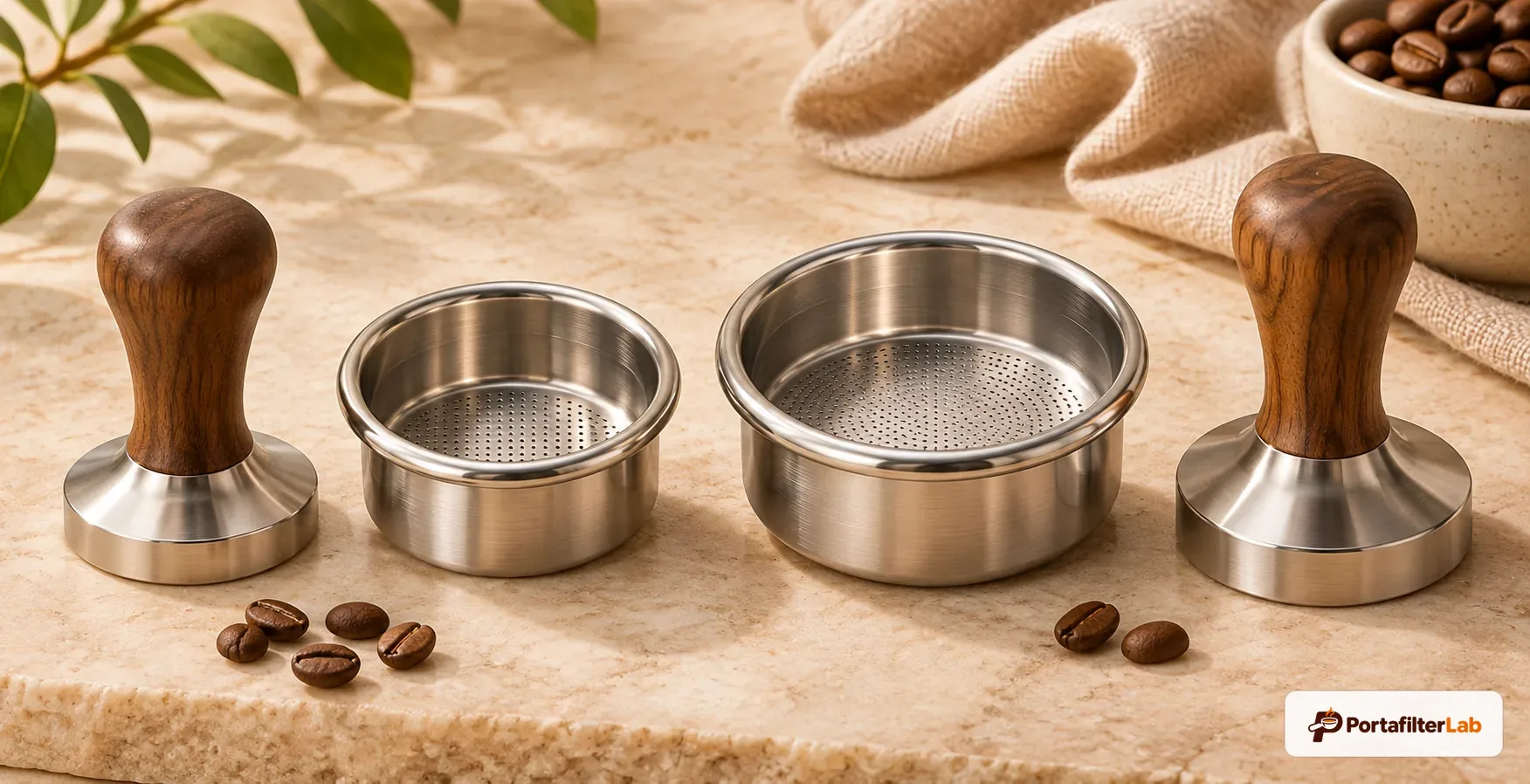
Quick Picks
Verified components referenced in this guide.
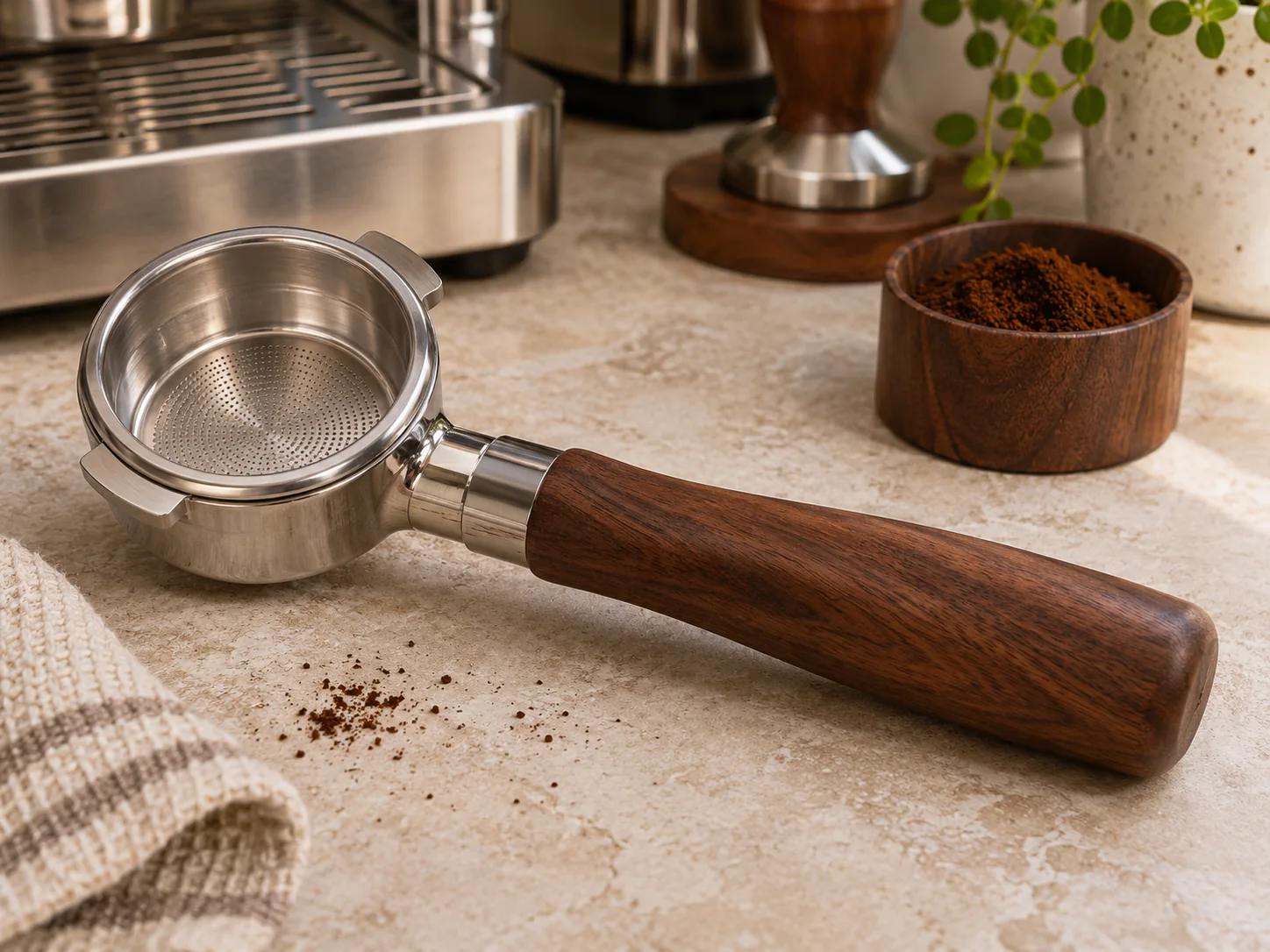
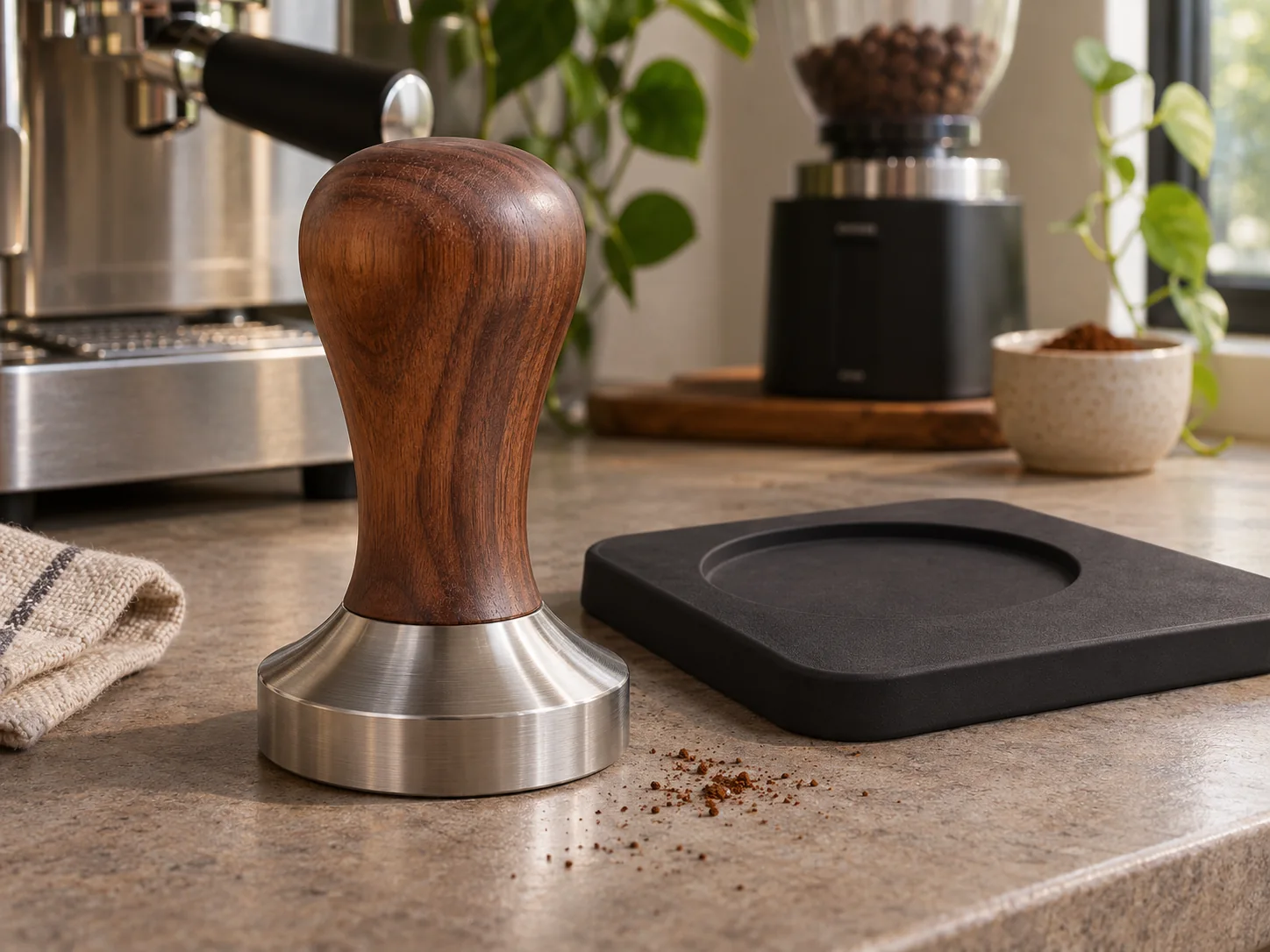
Key Takeaways
- Nominal 51mm, 54mm, and 58mm labels describe general group classes—never exact internal tamper diameters or cross-brand portafilter interchangeability.
- Breville and Sage 54mm baskets measure 53.4mm internally and require a 53.3mm tamper base, creating a taller, deeper coffee puck that is forgiving for beginners.
- Commercial 58mm VST and IMS baskets measure 58.55mm internally and pair with 58.4mm–58.5mm tampers, forming a wider, shallower puck that demands finer grinds.
- Portafilter locking ear count (2-ear vs 3-ear), angle (180° horizontal vs 45° diagonal), and tab thickness (5.9mm vs 6.2mm vs 6.3mm) prevent cross-brand locking.
Table of Contents 11
The core difference between 54mm and 58mm portafilters goes far beyond a 4-millimeter width label: 54mm baskets (led by Breville and Sage) have a 53.4mm internal tamper zone that builds a thicker, more forgiving coffee puck, whereas 58mm commercial baskets measure 58.0mm to 58.55mm internally, spread coffee across a wider surface area, demand finer grind precision, and unlock the largest aftermarket accessory ecosystem.
Just as importantly, nominal millimeter numbers never guarantee portafilter interchangeability. Ordering hardware based only on the number printed on a product box is the leading cause of returned portafilters and poorly fitting tampers. Before buying any upgrade, verify exact caliper specs across four mechanical dimensions or check your specific model in our Exact-Fit Accessory Finder.
1. Nominal Basket Class vs. Actual Internal Tamper Zone
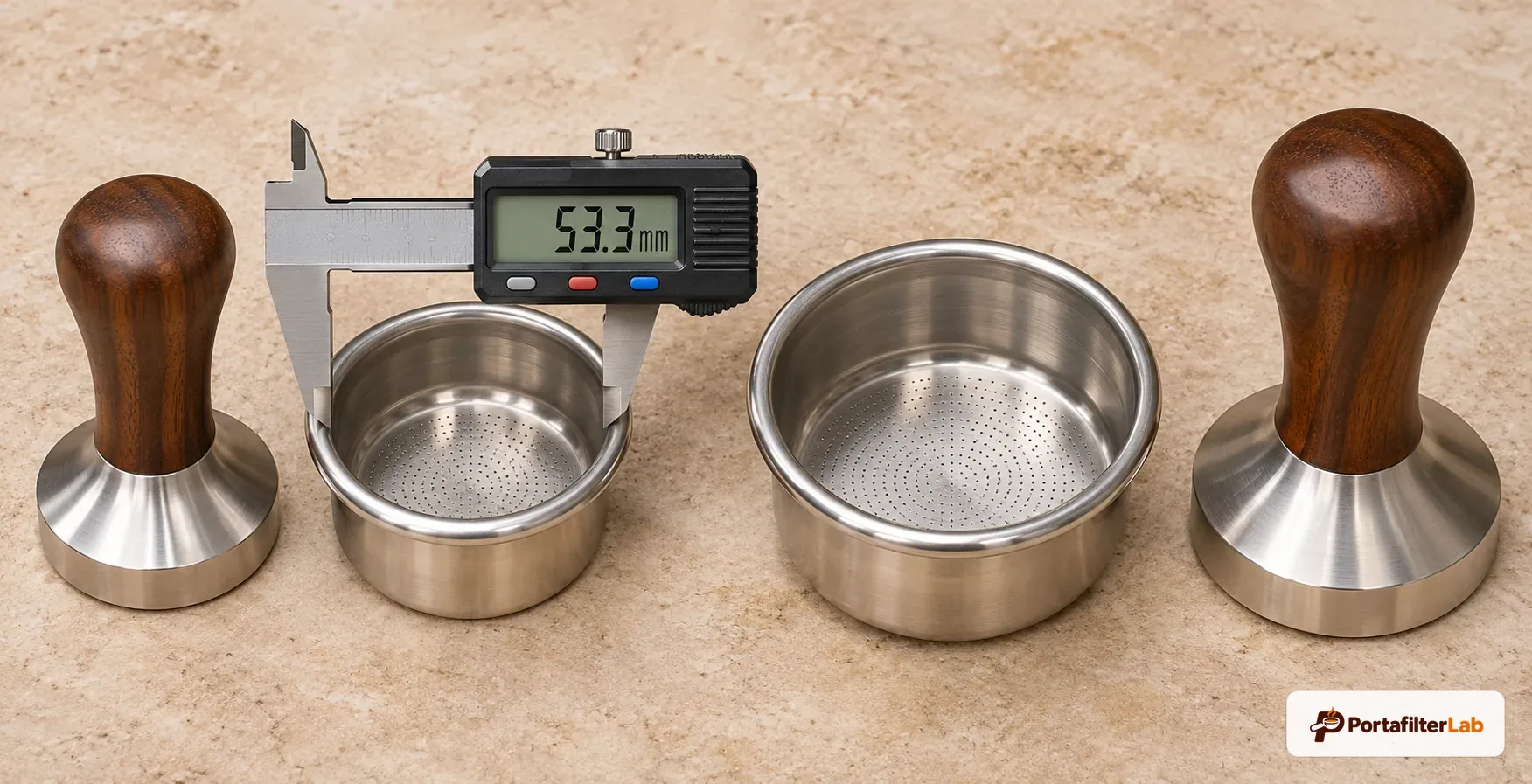
Filter baskets are stamped from stainless steel with slight vertical tapers or straight cylindrical walls, so the optimal tamper base rarely matches the nominal portafilter number. On 54mm Breville and Sage baskets, the tamper must be 0.7mm narrower than 54mm (53.3mm), whereas on 58mm precision baskets it must be 0.4mm–0.5mm wider than 58.0mm (58.4mm–58.5mm).
| Nominal Class | Verified Machine Examples | Precision Basket Tamper Zone | Verified Tamper Base | Locking Ear Standard |
|---|---|---|---|---|
| 51mm | De’Longhi Dedica EC885 / EC685 | 51.2mm – 51.5mm (IMS DL2TH26E) |
51.0mm Precision Tamper | 3 symmetrical ears (5.1mm tabs, 120°) |
| 54mm | Breville Barista Express (BES870XL), Bambino Plus (BES500), Sage Barista Pro (SES878) | 53.4mm (IMS B62.52TH & stock) |
53.3mm Precision Tamper | 3 symmetrical ears (6.2mm tabs, 120°) |
| 58mm (Gaggia) | Gaggia Classic Pro / Evo Pro (RI9380) | 58.0mm (OEM) / 58.55mm (VST & IMS) |
58.5mm Precision Tamper | 2 diagonal ears (6.3mm tabs, 45° offset) |
| 58mm (Commercial / E61) | Rancilio Silvia V6, E61 groups, Breville Dual Boiler (BES920XL) |
58.0mm (OEM) / 58.55mm (VST & IMS) |
58.5mm Precision Tamper | 2 horizontal ears (5.9mm–6.0mm, 180°) |
Note the practical difference when dialing in tamper clearances with our Tamper Size Finder:
- 54mm Breville / Sage Warning: A true
54.0mmtamper is physically too wide to drop into a53.4mmbasket. Using a generic53.0mmstock tamper leaves a0.4mmring of loose coffee around the perimeter, making a calibrated53.3mmtamper essential. - 58mm Precision Warning: Factory 58mm baskets often measure ~
58.0mm, while precision straight-wall baskets like the VST 18g Ridgeless Basket expand to58.55mm(60.0mmouter body /70.0mmouter rim). Pairing a58.0mmtamper with a58.55mmbasket leaves edge channeling; pairing a58.5mmtamper with a tight OEM tapered basket can bind at low doses.
2. Puck Geometry, Grind Sensitivity & Extraction Behavior
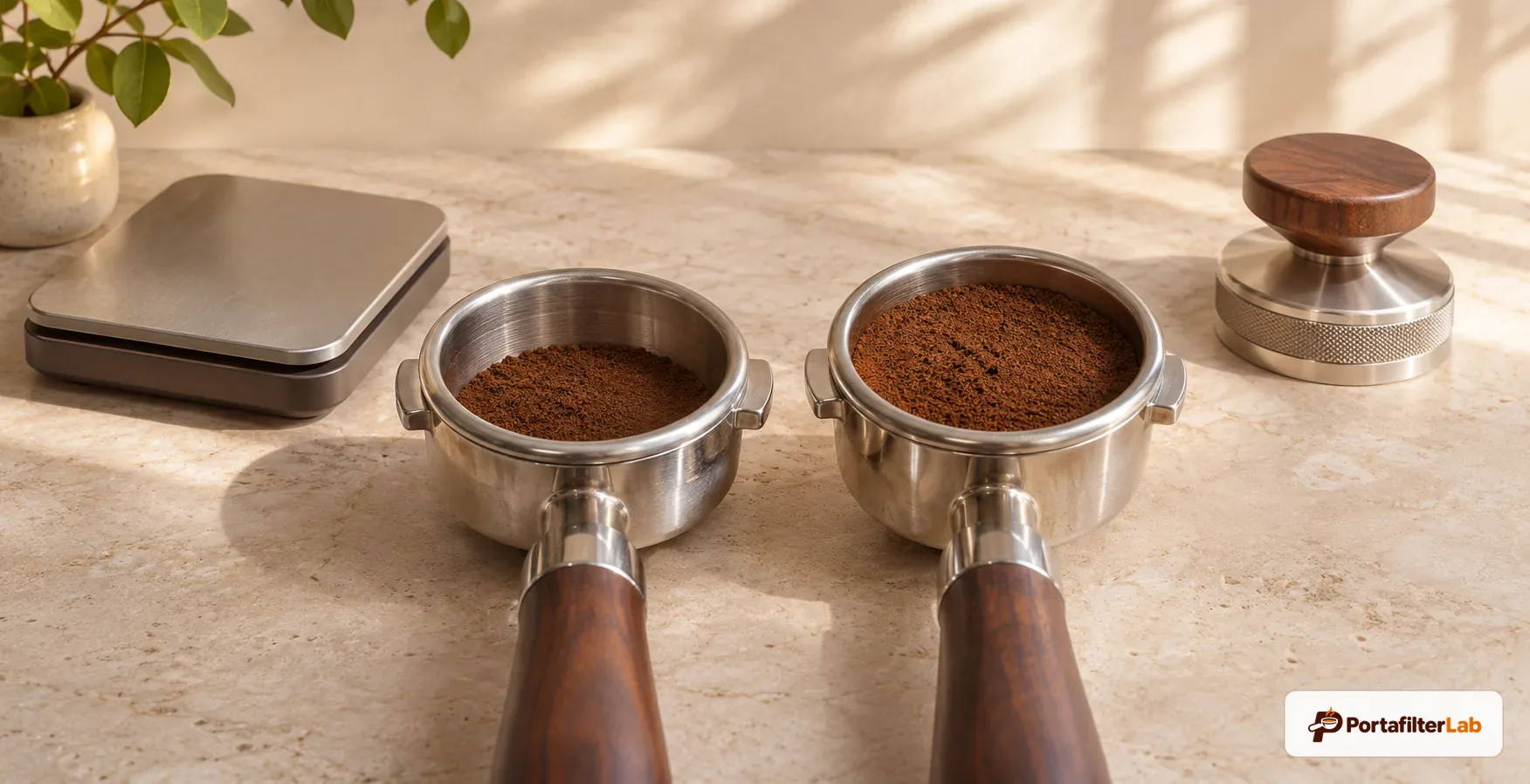
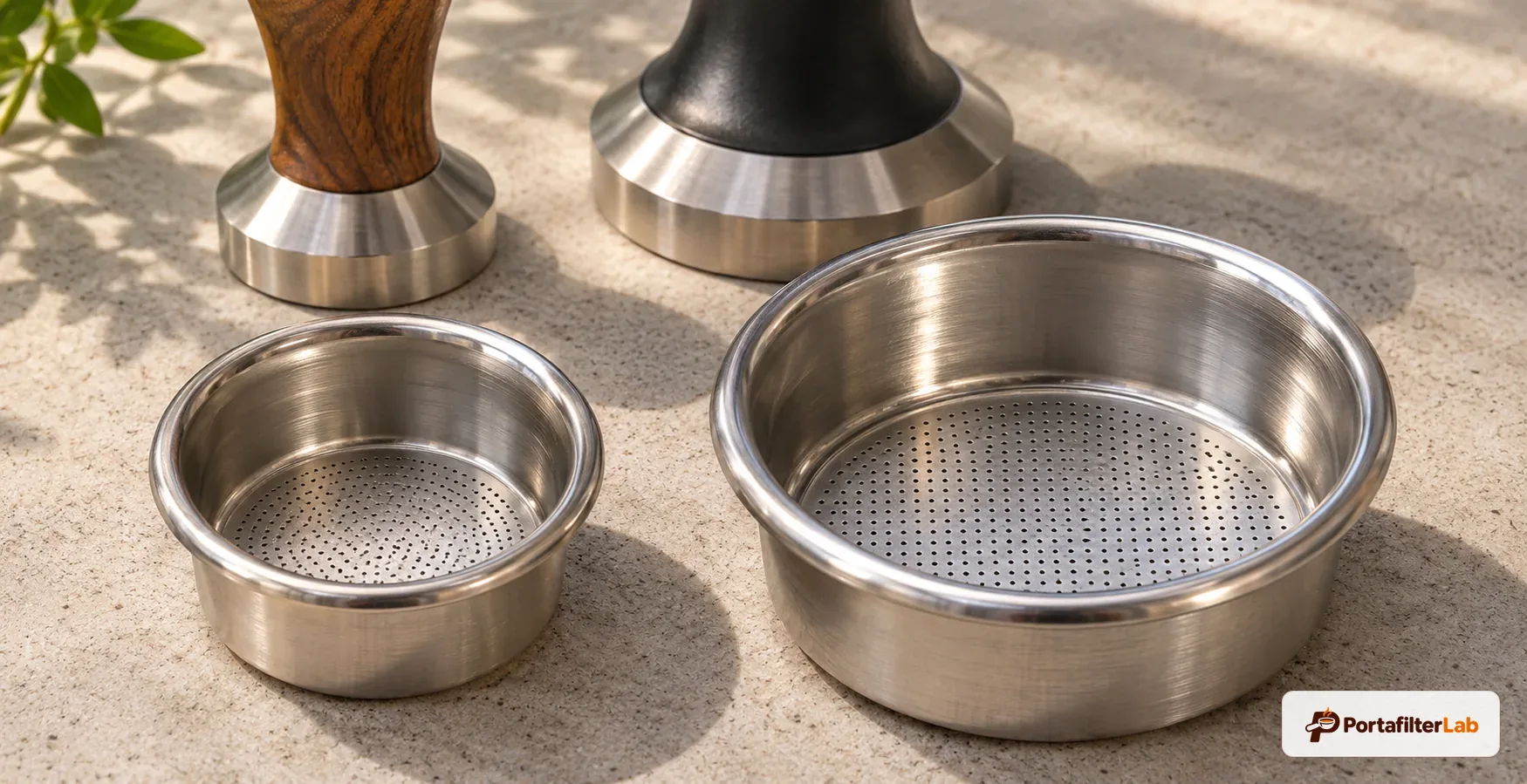
Holding an identical 18.0g dry dose (targeting a 36.0g liquid yield at 1:2.0 in our Brew Ratio Calculator), a 54mm basket produces a deeper, narrower coffee bed while a 58mm basket creates a wider, shallower coffee bed with ~19% more cross-sectional area. That geometric shift directly impacts your grinder, puck prep tolerance, and flavor clarity in the cup.
| Extraction Variable | 54mm Portafilter Architecture | 58mm Commercial Portafilter Architecture |
|---|---|---|
| Coffee Puck Shape (18g dose) | Taller vertical column, smaller diameter (53.4mm) |
Thinner vertical bed, wider surface area (58.55mm) |
| Required Grind Setting | Slightly coarser (deeper puck supplies natural hydraulic resistance) | Finer grind required (shallower bed offers less inherent flow resistance) |
| Beginner Forgiveness | Higher—minor distribution flaws channel less violently | Lower—small WDT or tamp tilt errors show immediately on bottomless pulls |
| Light-Roast Extraction Ceiling | Very strong when paired with IMS H24/H28 precision baskets & WDT |
Industry benchmark for uniform saturation and maximum extraction yield |
| Aftermarket Accessory Variety | Solid core selection (tampers, baskets, bottomless handles, funnels) | Massive commercial compatibility across cafés and boutique toolmakers |
Because a deeper 54mm coffee puck resists pressurized water over a longer vertical distance, entry-level home baristas often find machines like the Bambino Plus (BES500) more forgiving when transitioning into single-wall unpressurized baskets. Conversely, 58mm machines such as the Rancilio Silvia V6 or Gaggia Classic Pro reward stepped or stepless flat-burr grinders, careful 0.35mm WDT declumping, and tight-tolerance precision baskets.
3. Portafilter Locking Ear Count, Angle & Thickness
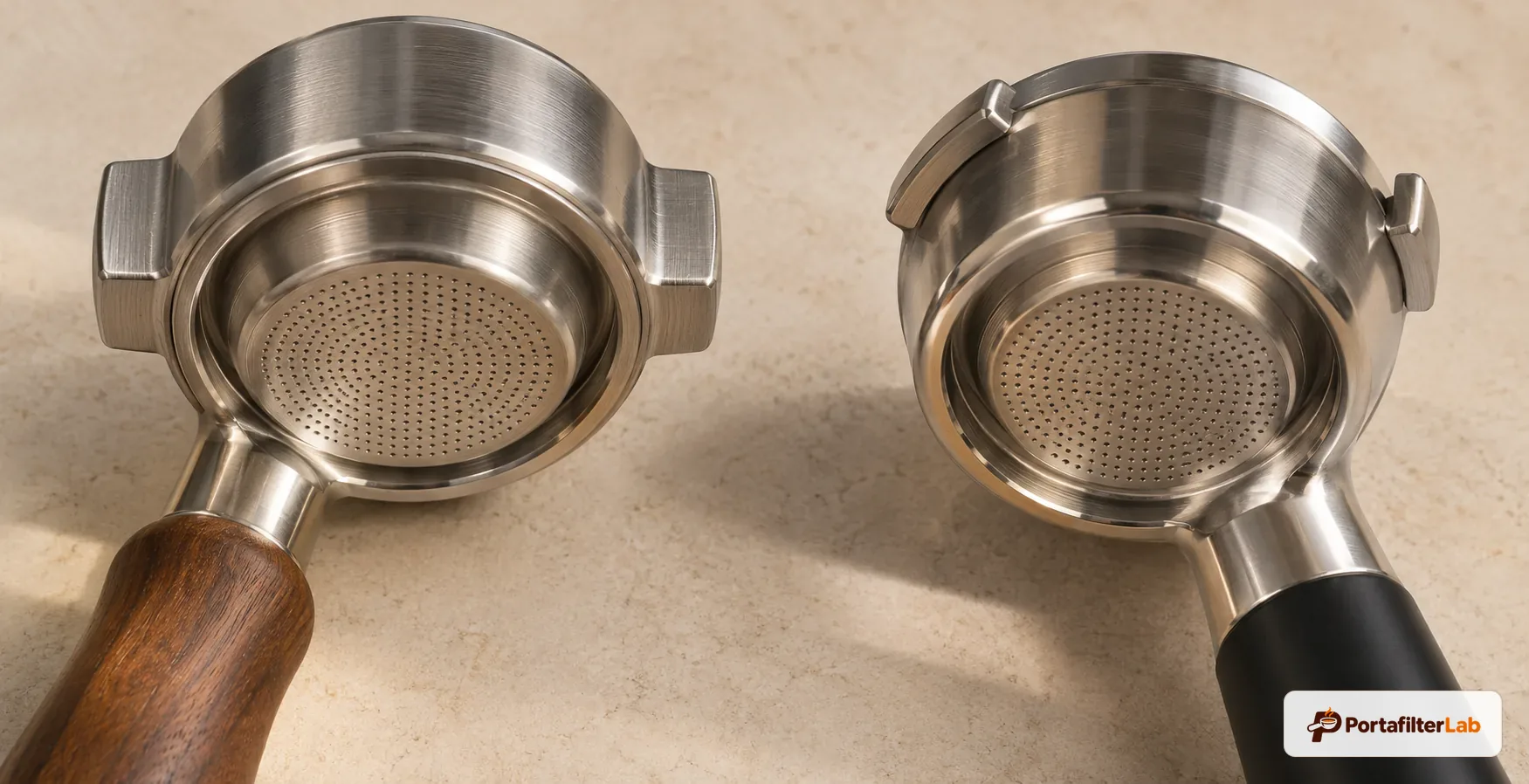
Two machines using identical 58mm filter baskets almost never swap portafilter handles if their locking ears (lugs) differ in count, rotational angle, or metal thickness. Group head locking collars rely on machined bayonet ramps to compress the rubber or silicone group gasket cleanly at the 6 o’clock handle position.
- 3 Symmetrical Ears (120° spacing): Standard across Breville and Sage 54mm machines (
BES870XL,BES500,SES878with6.2mmears) and De’Longhi 51mm Dedica models (EC685,EC885with5.1mmears). Note that the Breville Dual Boiler (BES920XL) uses a proprietary 58mm 3-ear collar—meaning E61 2-ear 58mm portafilters still do NOT fit it. - 2 Horizontal Ears (180° spacing, 90° to handle): Standard on E61 commercial 58mm groups (
5.9mmtab thickness) and the Rancilio Silvia (6.0mmtab thickness), where ears point to 3 o’clock and 9 o’clock. - 2 Diagonal Ears (45° offset): Exclusive to the Gaggia Classic family (
RI9380), using6.3mmthick tabs rotated roughly to 10:30 and 4:30. As detailed in our Gaggia vs E61 portafilter comparison, forcing an E61 handle into a Gaggia locks the handle crookedly toward 8:30 and risks steam-pressure leaks.
Even a 0.4mm to 0.5mm difference in locking ear thickness changes where your handle stops: overly thick aftermarket tabs halt early at 8 o’clock before fully sealing; overly thin tabs swing past 5 o’clock and spray water around the group gasket under 9-bar pressure.
4. Spouted Portafilter Depth vs. Competition Basket Height
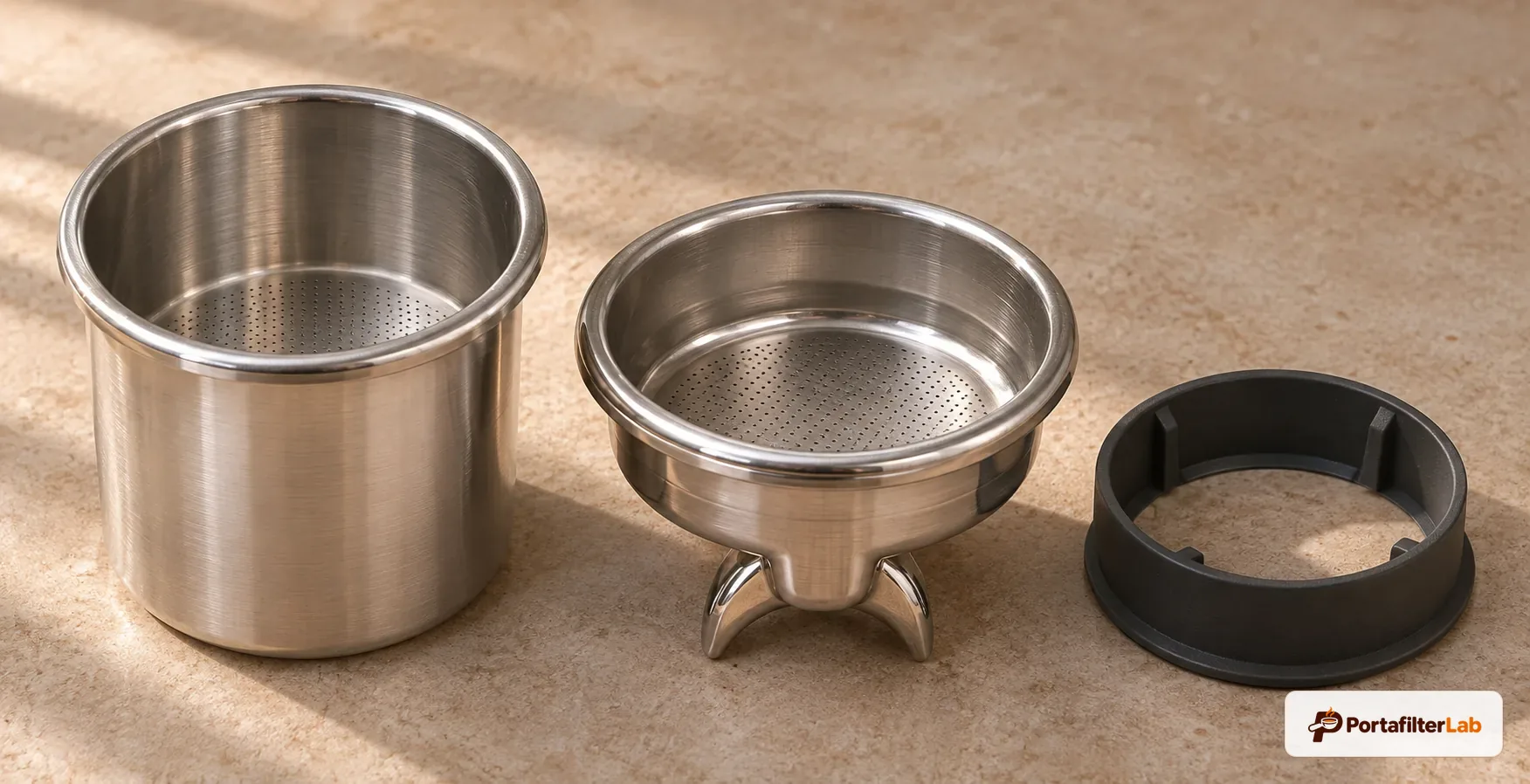
Upgrading a 51mm or 54mm setup with a deeper precision basket frequently causes bottoming-out inside factory spouted portafilters, even when the group diameter and ear tabs match perfectly. Stock Breville, Sage, and De’Longhi spouted handles contain a molded black plastic flow-divider insert designed to guide espresso smoothly toward the dual spouts.
- Standard Height Precision Baskets (
24.0mm – 24.2mm): The IMS B62.52TH24E (24.0mm) and VST 18g Ridgeless (24.2mm) drop into stock spouted portafilters without contacting the bottom floor. - Deep Competition Baskets (
26.0mm – 28.0mm): The IMS B62.52TH28E (28.0mm) on Breville/Sage 54mm machines and the IMS DL2TH26E (26.0mm) on De’Longhi Dedica models hit the factory plastic insert. You must either pry out the plastic divider or upgrade to a 54mm bottomless portafilter (30mmunobstructed clearance).
5. Which Standard Should You Choose When Buying Hardware?
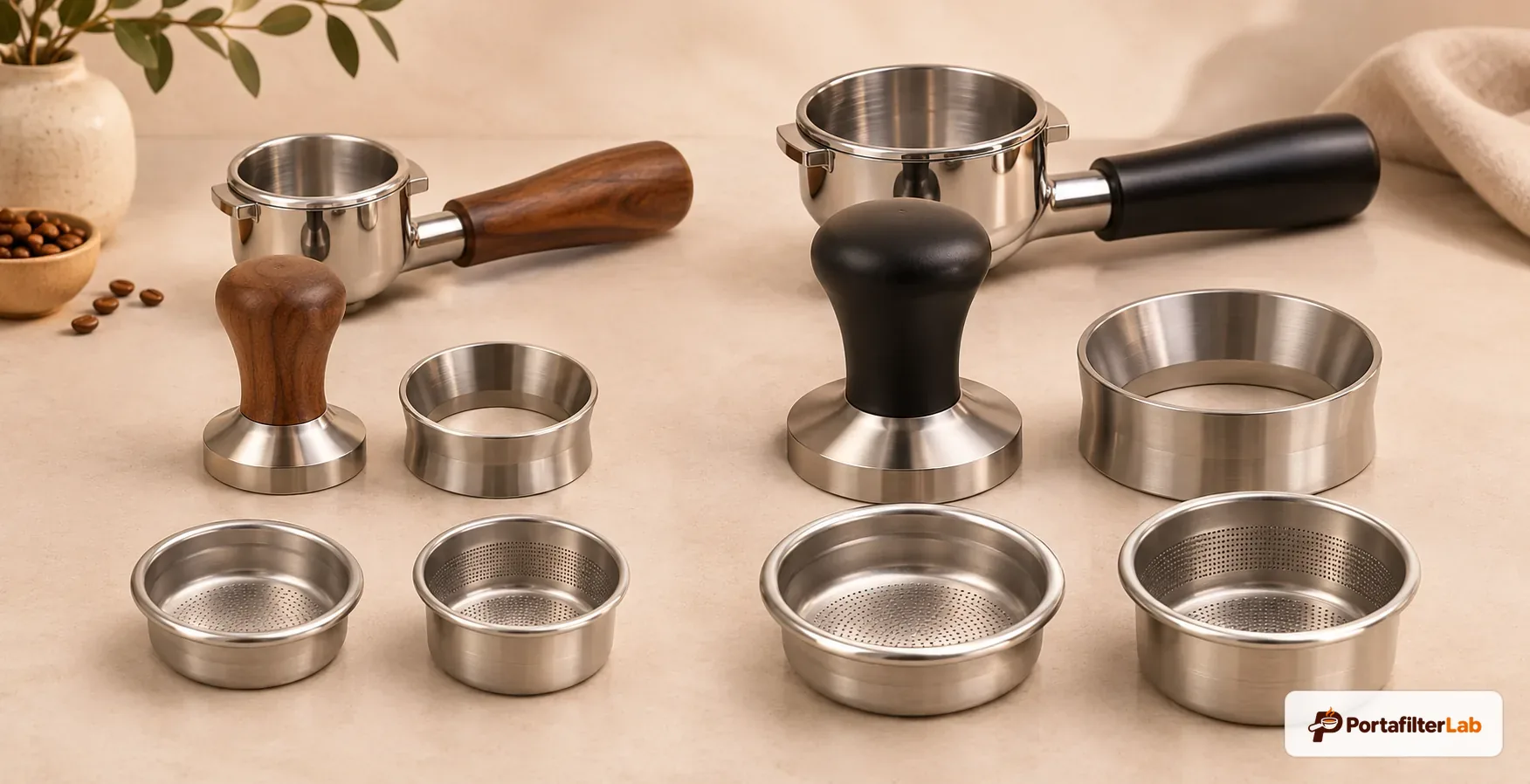
Choose 54mm if you want a forgiving daily workflow on compact ThermoJet or Thermocoil appliances (BES500, BES870XL, SES878) with fast heat-up times; choose 58mm if you plan to explore commercial flow profiling, upgrade grinders repeatedly, or swap precision baskets across future machines.
- Skip 54mm accessories if: You own a Breville Dual Boiler (BES920XL) or Oracle series (
58mmgroup), a Gaggia Classic, or a Rancilio Silvia. Do not assume all Breville machines share one size. - Skip E61 58mm portafilters if: You own a Gaggia Classic Pro or a Breville Dual Boiler—their baskets and tampers share the 58mm standard, but their locking ears require brand-specific portafilter handles.
- Avoid 51mm or 54mm accessories completely if: You brew on a super-automatic bean-to-cup machine (such as De’Longhi Magnifica S, Eletta Explore, or Gaggia Brera), which uses a sealed internal brew group with no removable portafilter.
Frequently Asked Questions
Which is better for beginners: a 54mm or 58mm portafilter?
A 54mm portafilter is generally easier for beginners because its 53.4mm tamper zone builds a deeper coffee puck that naturally resists water flow and forgives minor distribution mistakes. A 58mm portafilter spreads grounds thinner, requiring finer grinding and more consistent puck prep to prevent channeling.
Why does Breville call its basket 54mm if the recommended tamper is 53.3mm?
54mm is Breville’s nominal group class label rather than the exact bore measurement. The upper internal tamper wall of factory and IMS 54mm baskets measures 53.4mm, leaving less than 0.1mm of clean clearance for a 53.3mm precision tamper base to move smoothly without creating vacuum suction.
Can a 54mm Breville tamper fit a 58mm Gaggia or Rancilio portafilter?
No. Using a 53.3mm Breville tamper inside a 58.0mm–58.55mm commercial basket leaves over 5.0mm of loose, uncompressed coffee around the edge, causing severe perimeter channeling. Match 53.3mm tampers strictly to 54mm machines and 58.4mm–58.5mm tampers to 58mm precision baskets.
Why don’t Rancilio Silvia and Gaggia Classic Pro portafilters interchange if both are 58mm?
Both machines accept commercial 58mm baskets and 58.5mm tampers, but Rancilio Silvia positions its two locking ears horizontally at 180° (3 and 9 o’clock, 6.0mm tabs) whereas Gaggia places its two ears at a 45° diagonal offset (6.3mm tabs). Always buy a portafilter machined for your exact ear angle.
Do I need to grind differently when switching from 54mm to 58mm?
Yes. Moving to a wider 58mm basket creates a shallower puck depth for the same 18g dose, so water passes through with less resistance. You will need to dial your grinder finer on a 58mm setup to maintain a 25–30 second target extraction time.
Verified Espresso Machines Covered in This Guide
Inspect caliper-verified group head dimensions, locking ear profiles, and full compatibility matrices for each model.
Breville Bambino Plus
Tamper: 53.3mm – 53.4mm • 3 symmetrical locking ears
Breville Barista Express
Tamper: 53.3mm – 53.4mm • 3 symmetrical locking ears
De'Longhi Dedica Arte
Tamper: 51.0mm • 3 symmetrical locking ears
Gaggia Classic Pro / Evo Pro
Tamper: 58.4mm – 58.5mm (with precision baskets) / 58.0mm (stock basket) • 2 diagonal locking ears
Rancilio Silvia M V6
Tamper: 58.4mm – 58.5mm (precision baskets) / 58.0mm (stock basket) • 2 horizontal locking ears
Sage Barista Pro
Tamper: 53.3mm – 53.4mm • 3 symmetrical locking ears
Additional Referenced Accessories
18g Ridgeless Precision Filter Basket
58mm Commercial • 18g Ridgeless • H24.2mm
Verify Exact Machine Fit
Check portafilter ears & tamper diameter for your espresso machine.
Related Guides & Comparisons
In-depth guides and comparisons to help you make the right accessory choices.
Troubleshooting Puck Screen Indentations, Shower Screen Screw Collisions & Channeling
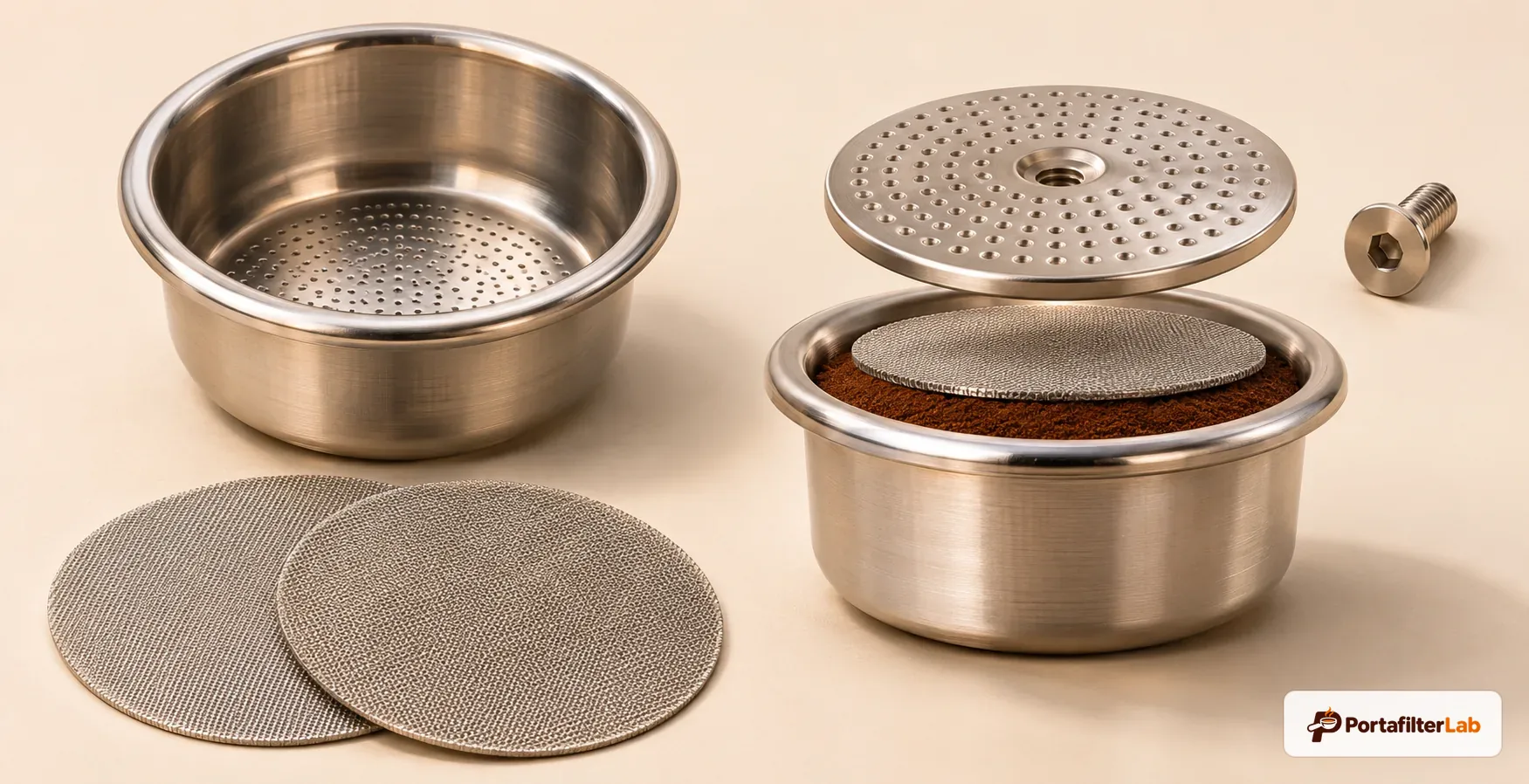
If your 1.7mm sintered steel puck screen comes out bowed or dented in the middle—or your espresso channels sideways—your basket lacks the 2.0mm headspace required to clear a protruding shower screen screw.
3-Way Solenoid Valves & Backflushing Compatibility: Which Espresso Machines Can Use Blind Baskets?
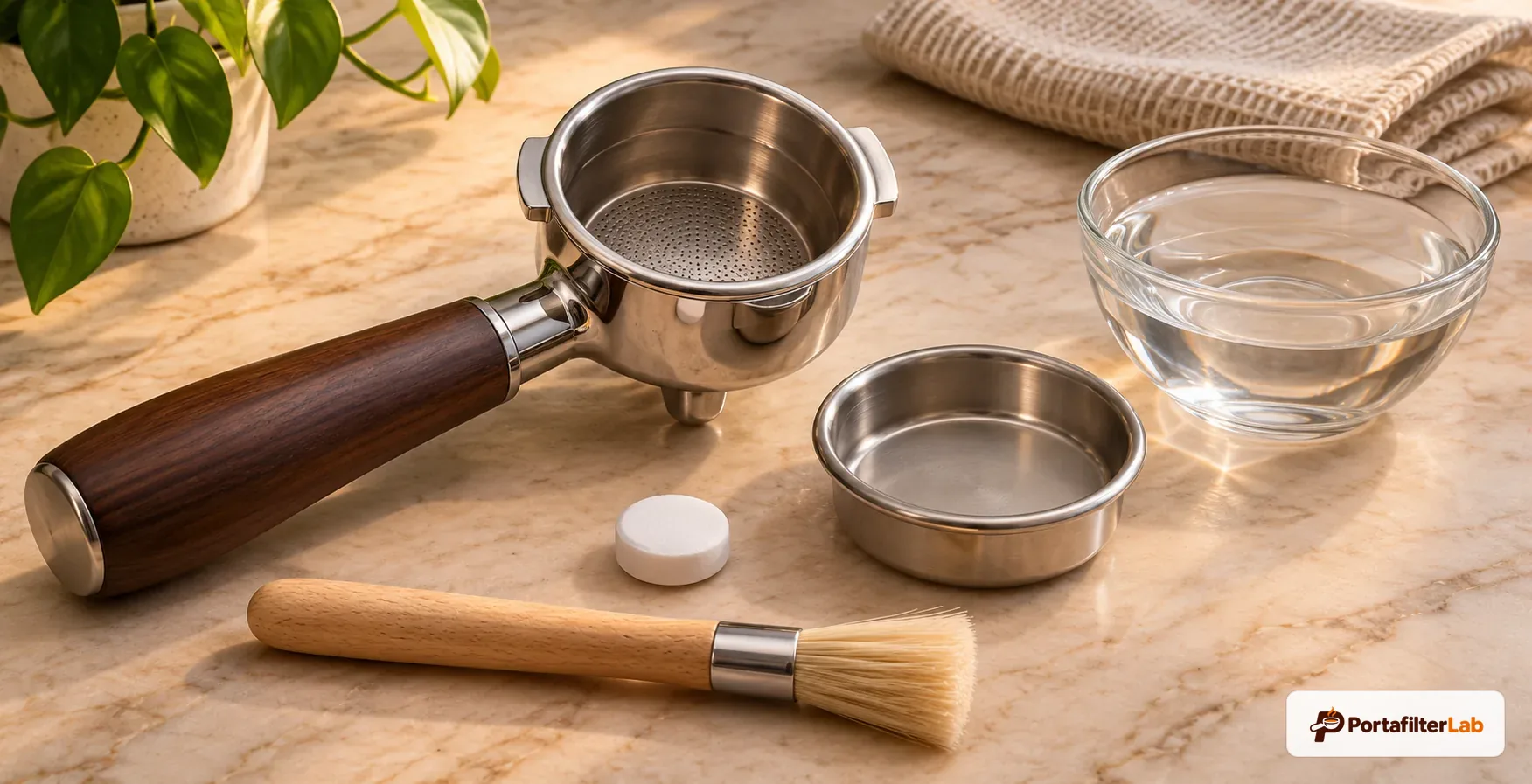
Blind-disc backflushing with espresso detergent is safe only on machines equipped with a 3-way solenoid valve. Learn which Breville, Sage, Gaggia, Rancilio, and De'Longhi models qualify, exact dosing steps, and aluminum warnings.
IMS & VST Precision Filter Basket Sizing Guide: Height Codes and Portafilter Clearance
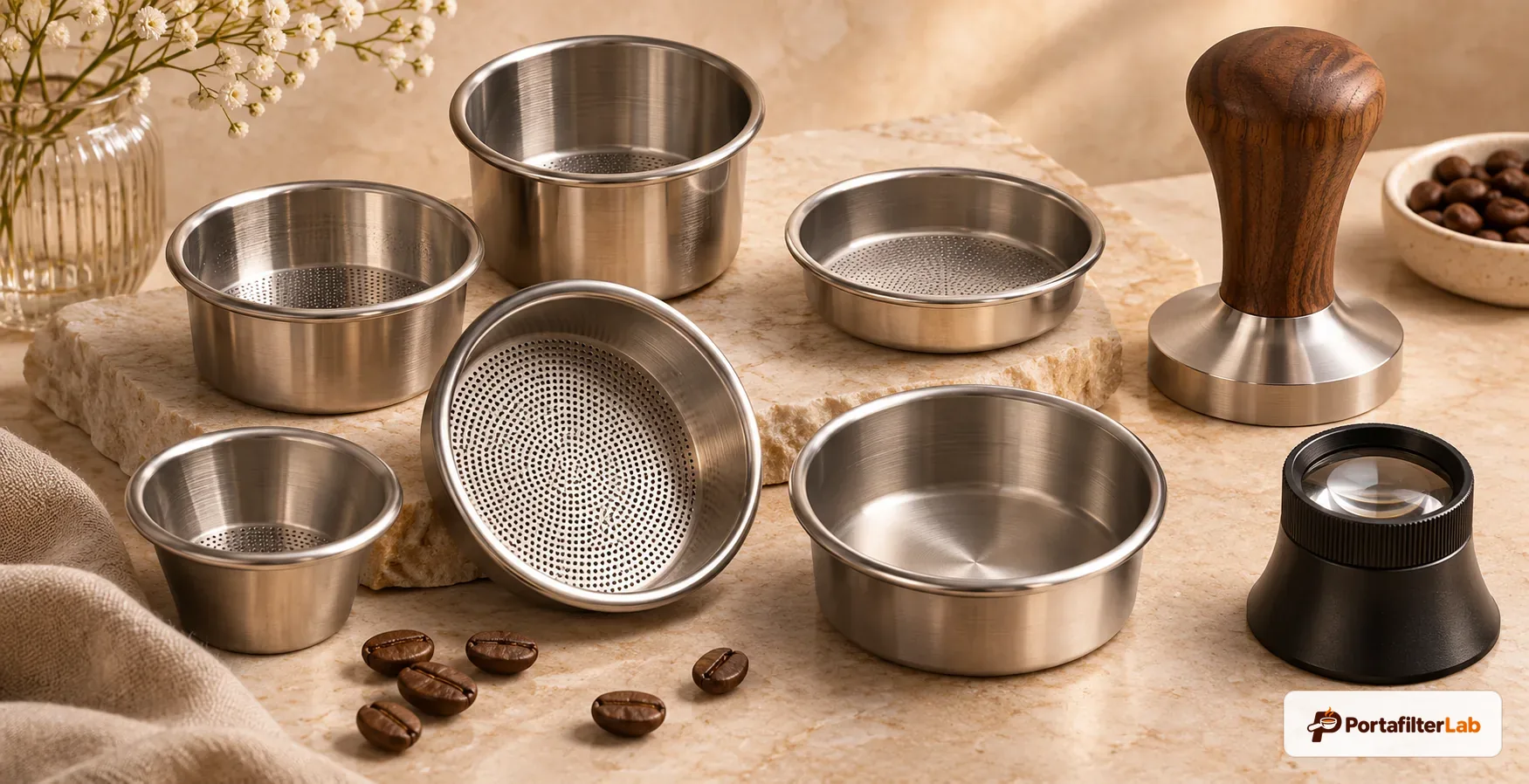
How IMS Competition and VST precision baskets compare across tolerances, wall geometry, part codes (H24, H26, H28), tamper pairing (51.0mm, 53.3mm, 58.5mm), and spouted portafilter depth.