
3-Way Solenoid Valves & Backflushing Compatibility: Which Espresso Machines Can Use Blind Baskets?
Blind-disc backflushing with espresso detergent is safe only on machines equipped with a 3-way solenoid valve. Learn which Breville, Sage, Gaggia, Rancilio, and De'Longhi models qualify, exact dosing steps, and aluminum warnings.
Quick Picks
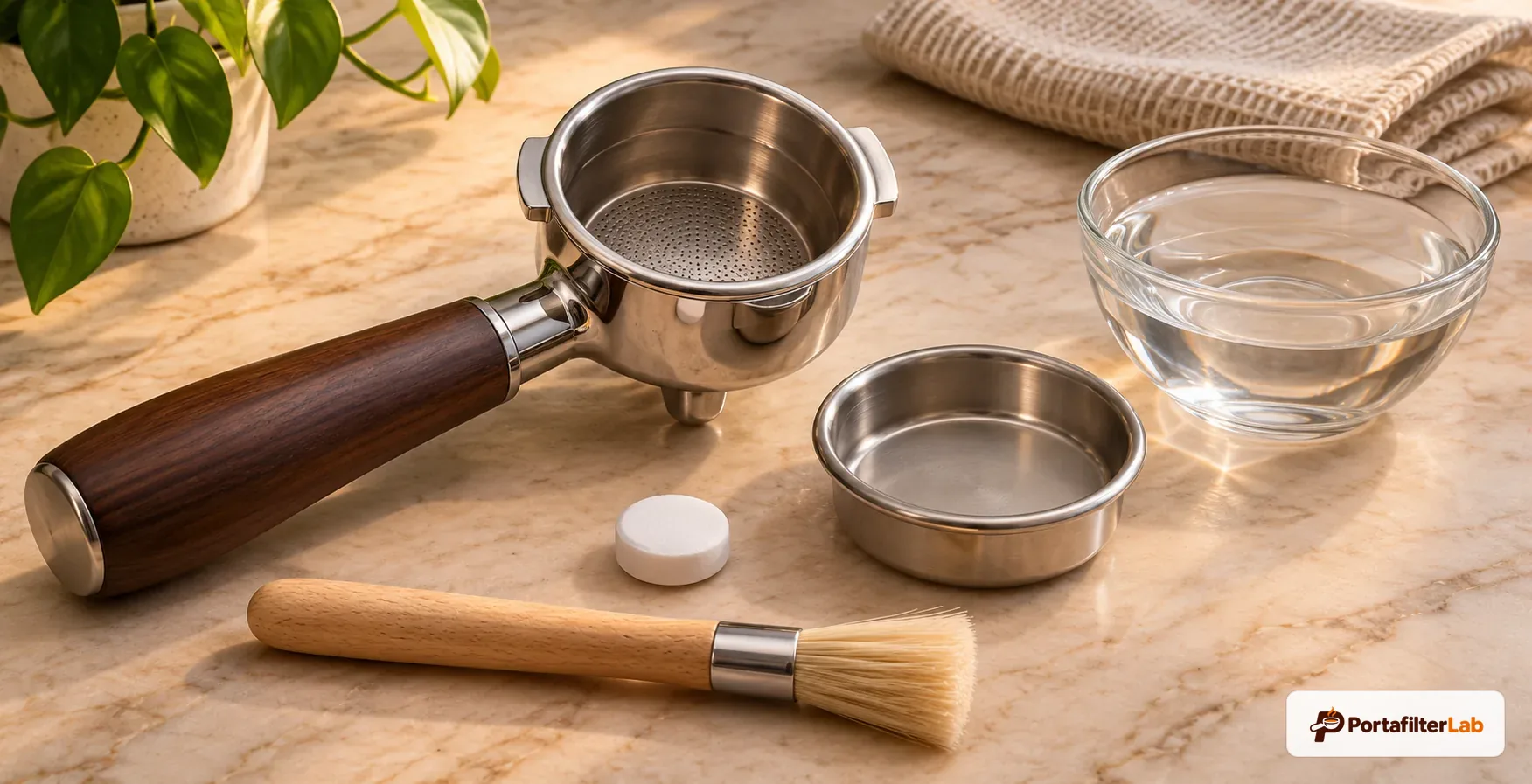
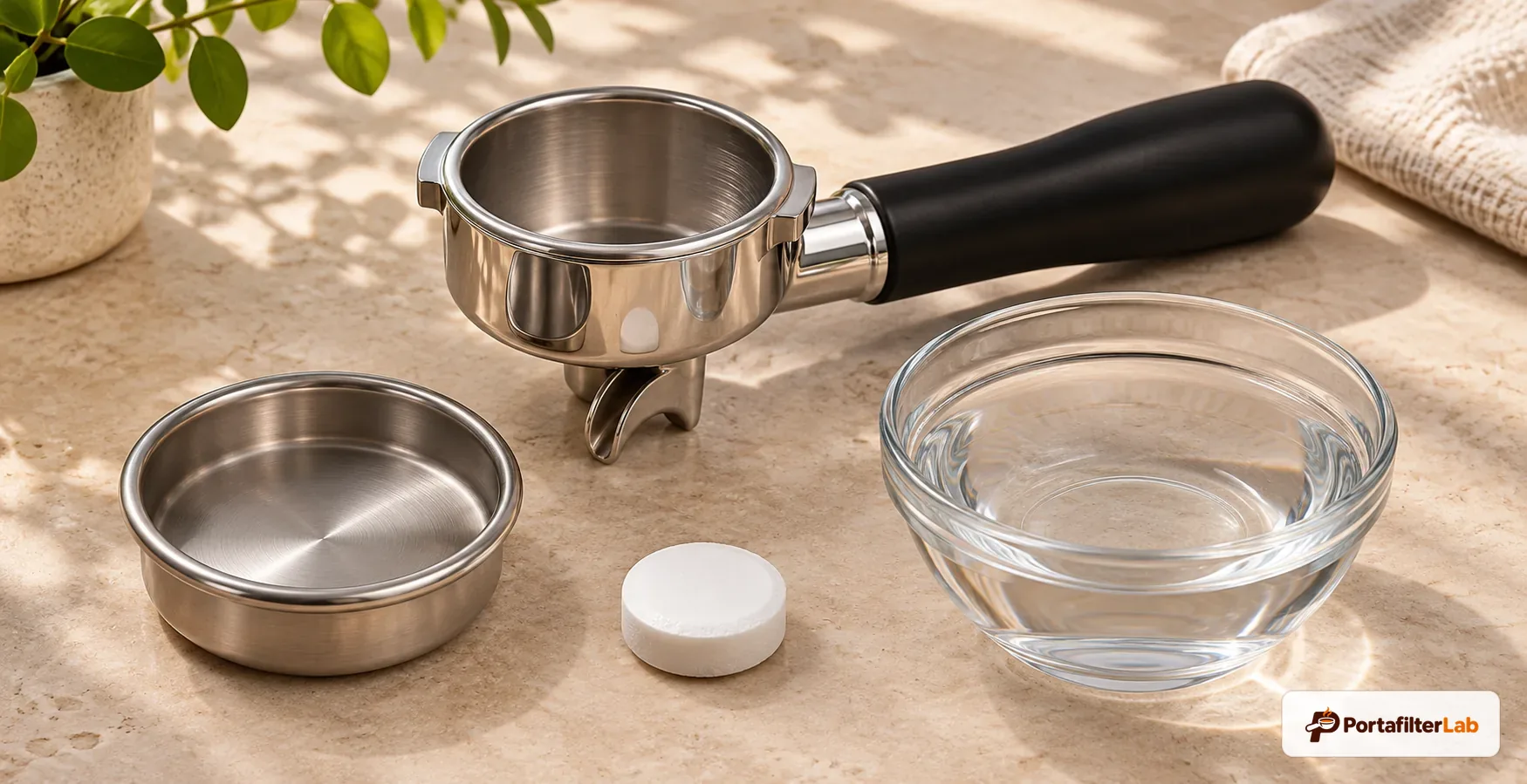
Verified components referenced in this guide.
Key Takeaways
- Blind-basket detergent backflushing is ONLY safe on espresso machines equipped with a 3-way solenoid valve to vent trapped 9–15 bar pressure into the drip tray.
- Breville Barista Express (BES870XL), Bambino Plus (BES500), Sage Barista Pro (SES878), Gaggia Classic Pro, and Rancilio Silvia V6 all support blind backflushing.
- The De'Longhi Dedica (EC685 / EC885) and super-automatic brewers lack a 3-way solenoid valve—never block their group head with a blind basket.
- Never soak bare aluminum components—such as the Dedica portafilter body or Gaggia bare aluminum dispersion holder—in alkaline Cafiza solution.
Table of Contents 13
You can safely backflush with a blind basket or rubber cleaning disc at 9–15 bar brewing pressure only if your espresso machine has a 3-way solenoid valve (or an E61 mechanical drain), such as the 54mm Breville Barista Express (BES870XL), Bambino Plus (BES500), Sage Barista Pro (SES878), 58mm Gaggia Classic Pro (RI9380), and Rancilio Silvia V6. Machines without a 3-way solenoid—including the 51mm De’Longhi Dedica (EC885 / EC685)—have nowhere to vent trapped pressure, so blocking flow with a solid blind basket stalls the pump and risks blowing group seals.
Even on solenoid-equipped machines, using too much alkaline detergent like Urnex Cafiza Powder or soaking aluminum portafilters causes pitting and valve sticking. Follow the verified machine matrix, exact step-by-step timings (1/4 tsp / ~3g dose), and metal compatibility rules below, and pair routine cleaning with scale prevention in our Water Hardness Converter.
1. What Does a 3-Way Solenoid Valve Do?
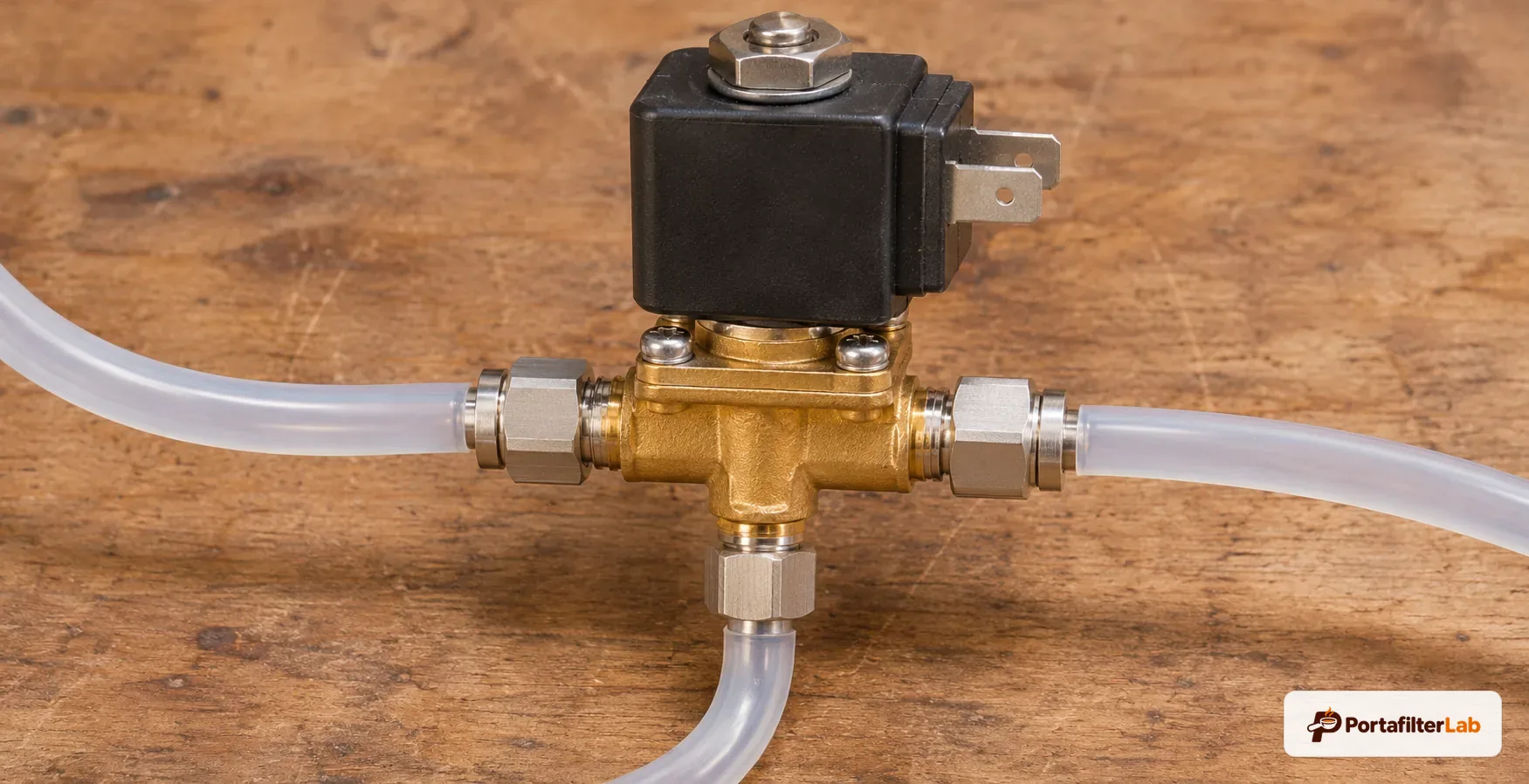
During a shot, the 3-way solenoid valve seals its third exhaust port so 9 to 15 bar water pressure drives directly into the coffee puck. The instant you switch the brew pump off, the solenoid energizes or releases to shut off boiler feed and open the drain port—venting residual group pressure down a stainless tube into the drip tray (producing the familiar “whoosh” sound and dry spent puck).
Every time that exhaust valve snaps open, tiny amounts of coffee oils and fine sediment are drawn backward up through the shower screen and solenoid seat. Without periodic backflushing, baked-on oils turn bitter, taint fresh shots, and eventually glue the solenoid plunger shut. When you lock in a solid blind basket or silicone disc, backflushing redirects clean water or dissolved espresso detergent backward up that exact internal drain path to clear oils before they harden.
2. Verified Backflush Compatibility by Machine Model
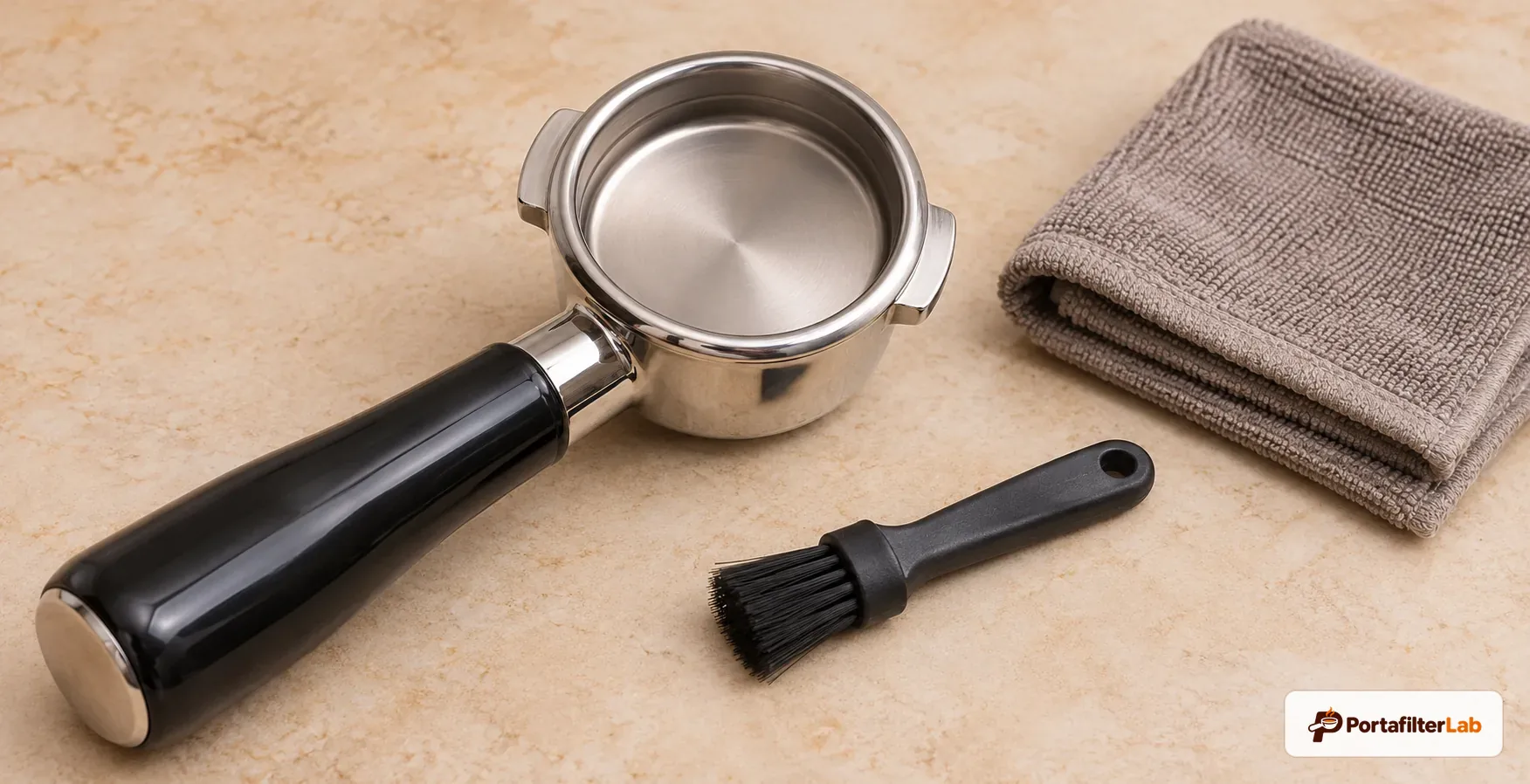
Never guess backflush eligibility from portafilter diameter or price tag alone—always check whether a 3-way solenoid drain path is built into your specific model inside our Exact-Fit Accessory Finder.
| Machine Model | Group Size | Has 3-Way Solenoid Valve? | Blind Basket Backflushing Safe? | Recommended Cleaning Hardware & Method |
|---|---|---|---|---|
Breville Barista Express (BES870XL) |
54mm |
Yes | Yes | 54mm silicone cleaning disc + Urnex Cafiza flush cycle |
Breville Bambino Plus (BES500) |
54mm |
Yes | Yes | Automated cleaning cycle using silicone disc (2-cup + 1-cup button sequence per manual) |
Sage Barista Pro (SES878) |
54mm |
Yes | Yes | LCD-guided flush cycle with cleaning disc |
Gaggia Classic Pro / Evo (RI9380) |
58mm |
Yes | Yes (keep aluminum block out of soak) | 58mm stainless blind basket backflush + thorough plain-water rinse |
| Rancilio Silvia V6 | 58mm |
Yes | Yes | 58mm stainless blind basket or rubber blind insert backflush |
De’Longhi Dedica Arte (EC885) / EC685 |
51mm |
No (mechanical check valve) | NO — Do Not Backflush | Unscrew shower screen, wipe dispersion plate, soak stainless baskets only |
Bean-to-Cup Super-Automatics (Magnifica, Anima, etc.) |
Sealed internal | Internal brew unit | NO — Not Applicable | Manufacturer descaling & brew-unit rinse tablets per OEM manual only |
Warning for Non-Solenoid Machines (De'Longhi Dedica)
If you lock a solid blind rubber disc into a De’Longhi Dedica (EC885 / EC685), water pressurized up to 15 bar dead-ends at the group gasket because there is no 3-way exhaust tube to the drip tray. To clean a Dedica safely, unscrew the single center screw under the 51mm dispersion screen every 2–4 weeks, scrub the screen with warm water, and soak removable stainless baskets separately.
3. Water vs. Chemical Backflush: Exact Timing & Dosage
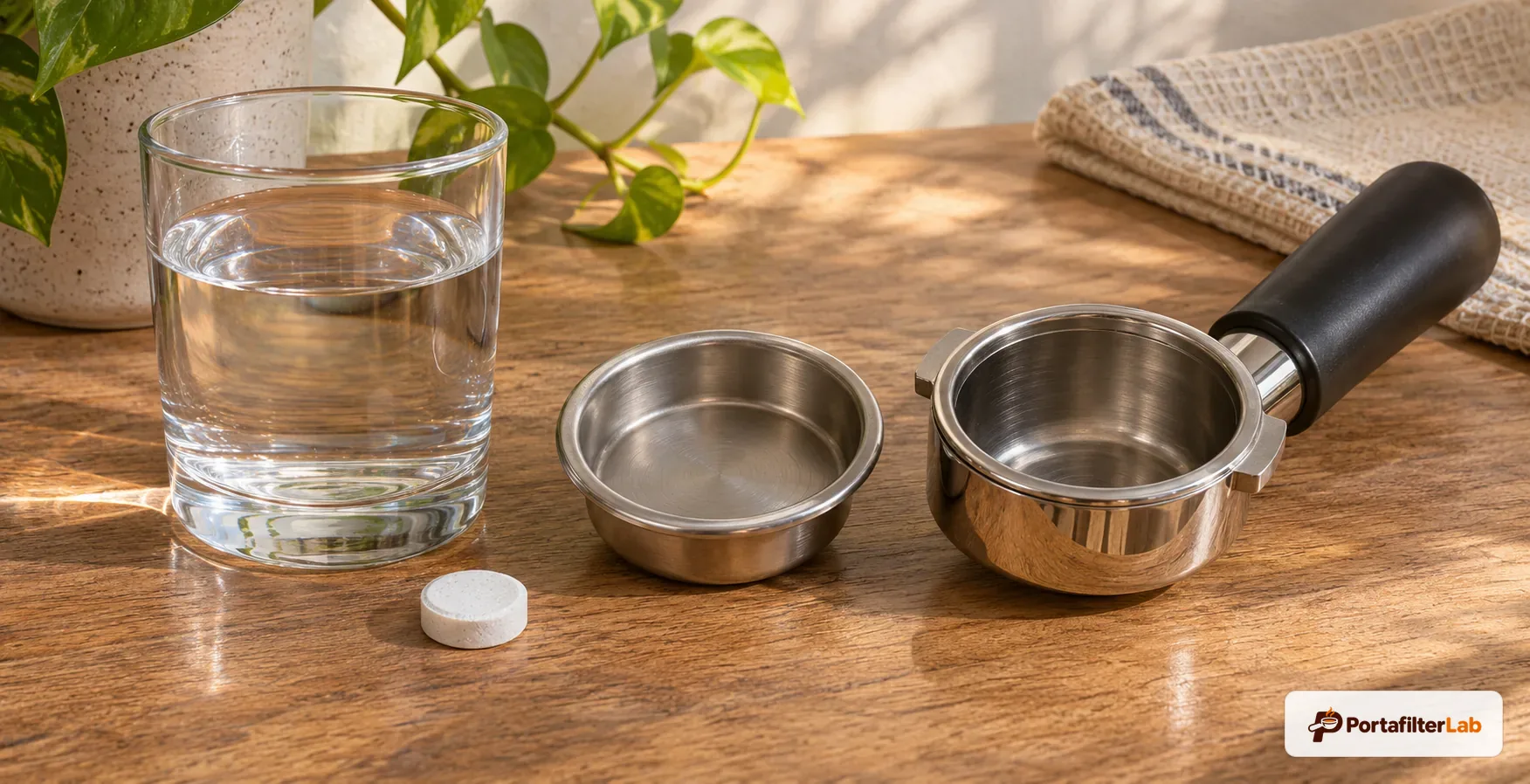
Running a quick water-only backflush every few days removes loose oils before they polymerize, letting you stretch deep chemical detergent backflushes to once every 2–4 weeks (50–100 shots) without stripping group lubrication.
| Maintenance Mode | Recommended Cadence | Detergent Dose | Cycle Timing & Repetitions | Mandatory Rinse Step |
|---|---|---|---|---|
| Plain Water Backflush | Every 2–4 days (or daily on heavy use) | None (0g detergent) |
5–10 seconds pump ON → OFF (5s rest) × 3–5 cycles |
Wipe group gasket & shower plate with damp cloth |
Detergent Backflush (Cafiza) |
Every 2–4 weeks (50–100 shots) |
Max 1/4 tsp (~3g) Cafiza |
5–10s pump ON → 10–30s soak OFF × 5 cycles |
Rinse portafilter clean; run 8–10 plain-water cycles (5s ON/OFF) + discard 1 plain shot |
Step-by-Step Chemical Backflush Protocol (Manual 3-Way Solenoid Machines)
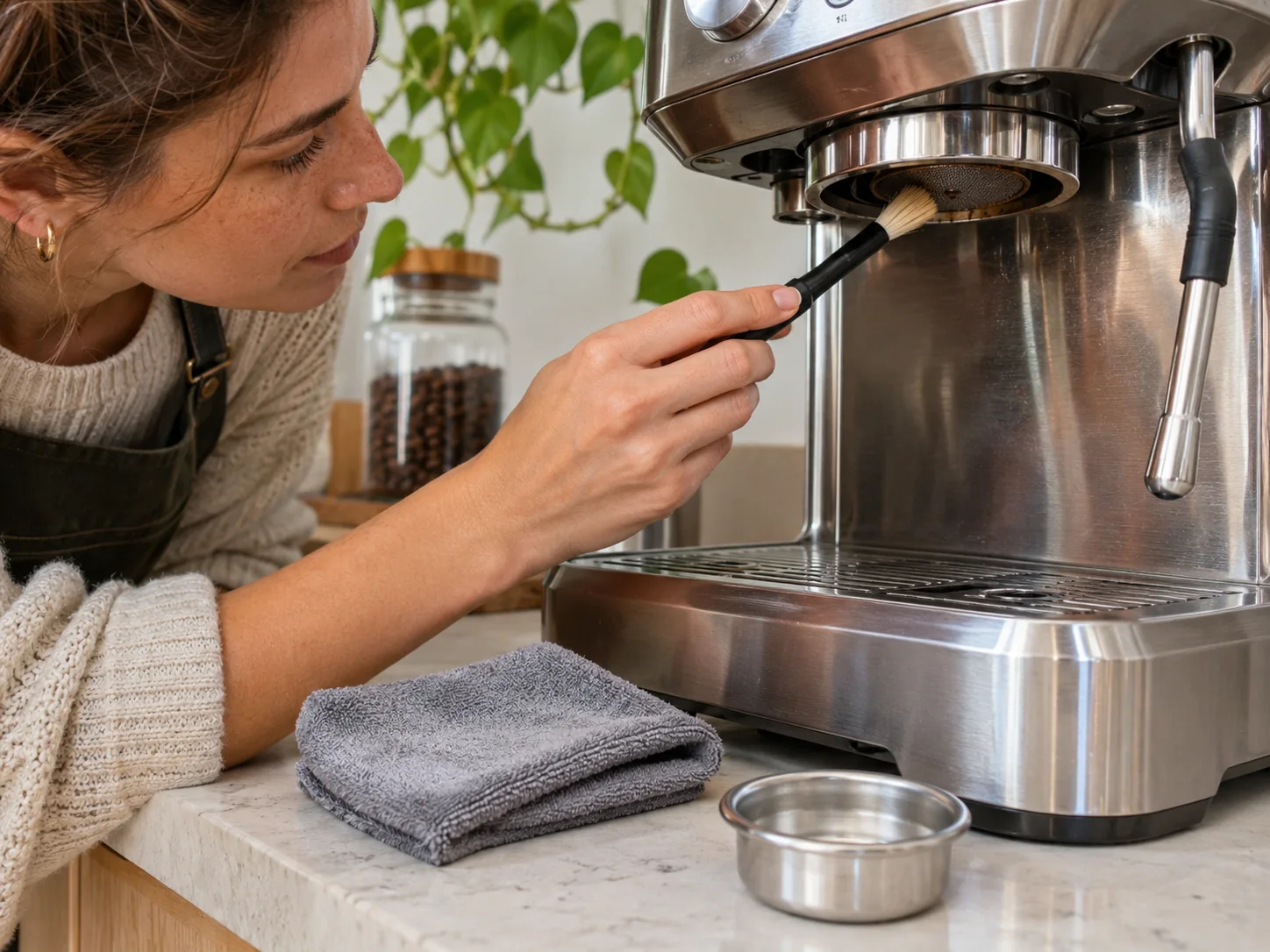
For semi-automatic solenoid machines without an automated timer—such as the Gaggia Classic Pro and Rancilio Silvia V6—follow this clean sequence:
- Swap to a Blind Basket: Replace your espresso basket with a hole-free stainless steel blind basket (
58mm), add no more than1/4 teaspoon(~3g) of Urnex Cafiza, and lock the portafilter firmly at6 o'clock. Overdosing powder creates thick foam that can bind the solenoid valve. - Pressurize & Dissolve (
5 Cycles): Flip the brew switch ON for 5 to 10 seconds until pump pitch drops under pressure, then switch OFF so the valve dumps soapy water into the drip tray. Wait 15 to 20 seconds between cycles so alkaline detergent dissolves baked oils inside the dispersion path. Repeat 5 times. - Rinse Thoroughly (
8–10 Cycles): Unlock and rinse all detergent out of the blind basket under hot tap water, relock empty, and run 8 to 10 water-only cycles (5 secondsON,5 secondsrest) until drip-tray discharge runs completely clear and odorless. - Pull 1 Sacrificial Shot: Install your regular filter basket and run
30–60mlof plain hot water (or pull one throwaway shot) so zero bitter alkaline residue remains before brewing coffee.
(Note: For Breville BES870XL, BES500, and Sage SES878, insert the silicone disc inside the 1-cup basket, place 1 cleaning tablet or measured powder dose, and trigger the factory cleaning cycle described in your owner’s manual—never force manual long cycles if the LCD/button flash sequence automates pulse timing.)
4. Critical Metal Safety Warning: Stainless Steel vs. Aluminum
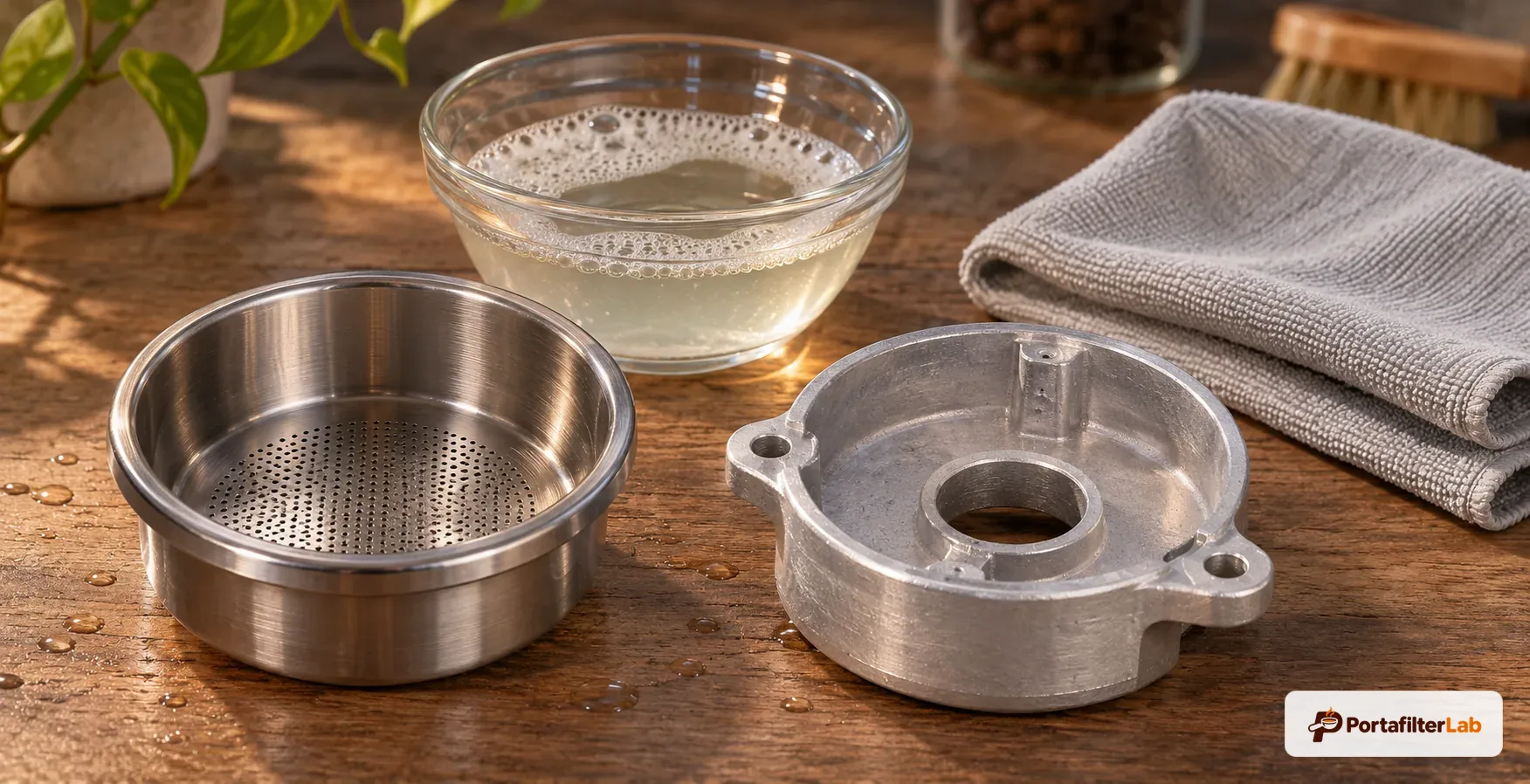
Alkaline espresso detergents like Urnex Cafiza (formulated with sodium carbonate and sodium percarbonate) dissolve baked coffee oils rapidly on 304/316 stainless steel and chromed brass, yet chemically attack bare or anodized aluminum on contact.
- DO NOT Soak Bare Aluminum Portafilters or Dispersion Blocks: Never submerge a De’Longhi Dedica aluminum-body portafilter or remove and soak a Gaggia Classic bare aluminum dispersion plate/holder in a Cafiza bath. Even 10–15 minutes of hot alkaline soaking turns bare aluminum chalky charcoal-gray, pits the surface, and loosens tolerances.
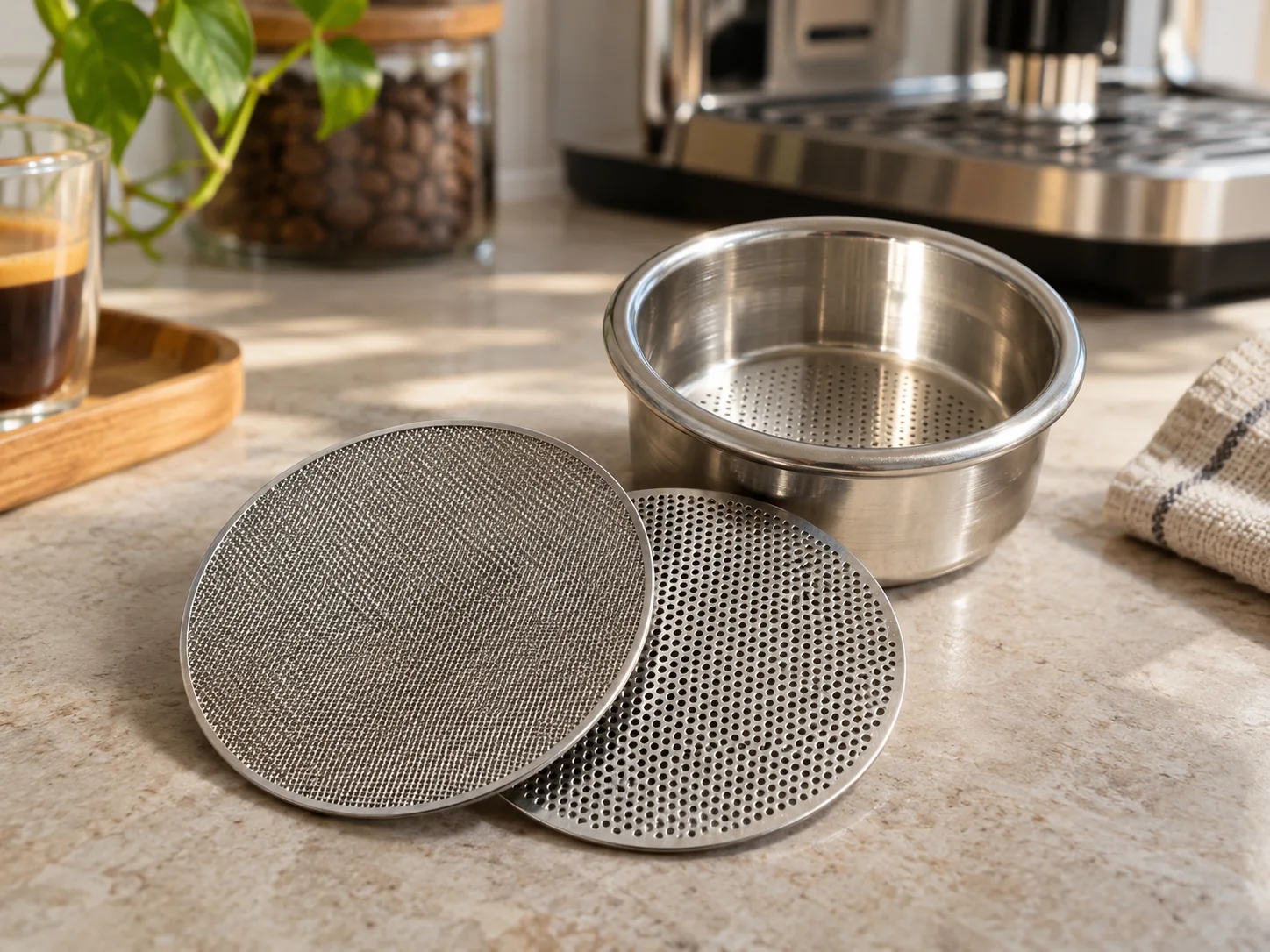
- Safe Parts to Soak: Soak only removable stainless steel filter baskets (IMS, VST, OEM), 316L sintered puck screens (such as a 58.5mm or 53.3mm screen, where Cafiza clears trapped internal fines between sintered layers), and solid brass/stainless portafilter heads (keeping wood handles dry above the waterline).
5. Troubleshooting a Stuck Solenoid & Preventing Mineral Scale
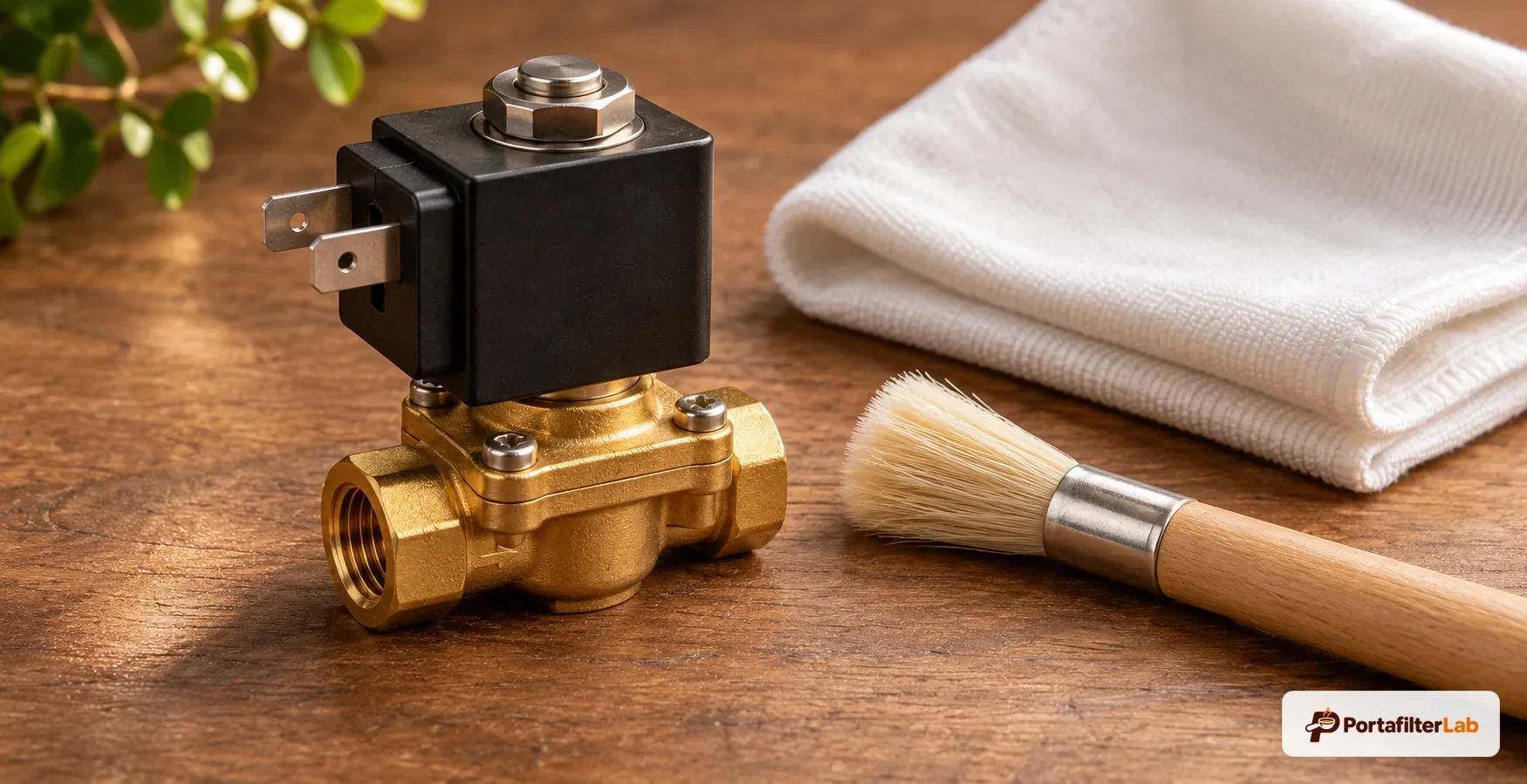
Coffee oils are only half of group head clogs; calcium and magnesium limescale often mixes with coffee residue inside narrow solenoid orifices (< 1.5mm internal jets).
- Symptom: Machine buzzes under pressure, nothing exits the shower screen, and water dumps straight to the tray. A tiny scale fleck or hardened oil plug is wedging the 3-way solenoid plunger. First verify water hardness in our Water Hardness Converter (
50–85 ppmSCA target vs> 140 ppmsevere scale risk), then run a careful hot Cafiza backflush or consult OEM descaling guidance if mineral scale is responsible. - Do not confuse Cafiza backflushing with descaling: Alkaline Cafiza only removes coffee oil inside the group head and solenoid drain—it does not remove white calcium limescale inside your boiler or ThermoJet! Descaling requires an acid-based descaler routed through the water tank on your maker’s schedule.
Frequently Asked Questions
Can I backflush a De’Longhi Dedica with a blind basket?
No. The De’Longhi Dedica (EC685 and EC885) uses a spring-loaded mechanical group valve rather than a 3-way solenoid valve. Blocking the portafilter with a solid blind basket traps pressurized water with no drip-tray vent path and can damage the pump or group gasket.
Is Urnex Cafiza safe to use in my Breville Bambino Plus or Barista Express?
Yes. Both the Breville Bambino Plus (BES500 / SES500) and Barista Express (BES870XL / SES875) include a 3-way solenoid valve and support detergent backflushing with a silicone cleaning disc and NSF-certified Cafiza Espresso Machine Cleaning Powder or tablets, followed by thorough plain-water rinses.
Why shouldn’t I soak an aluminum portafilter or Gaggia dispersion block in Cafiza?
Alkaline sodium carbonate/percarbonate cleaners react chemically with aluminum alloys, causing permanent black oxidation staining and metal pitting. Restrict hot Cafiza baths strictly to removable stainless steel baskets, stainless screens, and brass/stainless portafilter cups while keeping wood handles dry.
How often should I backflush with detergent vs. plain water?
Perform a quick plain-water backflush (3–5 short cycles) every few days or after heavy weekend sessions, and run a chemical backflush (1/4 tsp / ~3g Cafiza) every 2 to 4 weeks (roughly 50–100 shots). Backflushing with detergent every day is unnecessary and dries out group head seals faster.
Does Cafiza backflushing descale my espresso boiler?
No. Cafiza is an alkaline detergent engineered strictly for dissolving coffee oils in the group head, shower screen, blind basket, and 3-way solenoid exhaust path. To dissolve internal calcium limescale inside boilers or thermocoils, run your machine maker’s dedicated descaling procedure and monitor feed water hardness below 85 ppm.
Verified Espresso Machines Covered in This Guide
Inspect caliper-verified group head dimensions, locking ear profiles, and full compatibility matrices for each model.
Breville Bambino Plus
Tamper: 53.3mm – 53.4mm • 3 symmetrical locking ears
Breville Barista Express
Tamper: 53.3mm – 53.4mm • 3 symmetrical locking ears
De'Longhi Dedica Arte
Tamper: 51.0mm • 3 symmetrical locking ears
Gaggia Classic Pro / Evo Pro
Tamper: 58.4mm – 58.5mm (with precision baskets) / 58.0mm (stock basket) • 2 diagonal locking ears
Rancilio Silvia M V6
Tamper: 58.4mm – 58.5mm (precision baskets) / 58.0mm (stock basket) • 2 horizontal locking ears
Verify Exact Machine Fit
Check portafilter ears & tamper diameter for your espresso machine.
Related Guides & Comparisons
In-depth guides and comparisons to help you make the right accessory choices.
Troubleshooting Puck Screen Indentations, Shower Screen Screw Collisions & Channeling
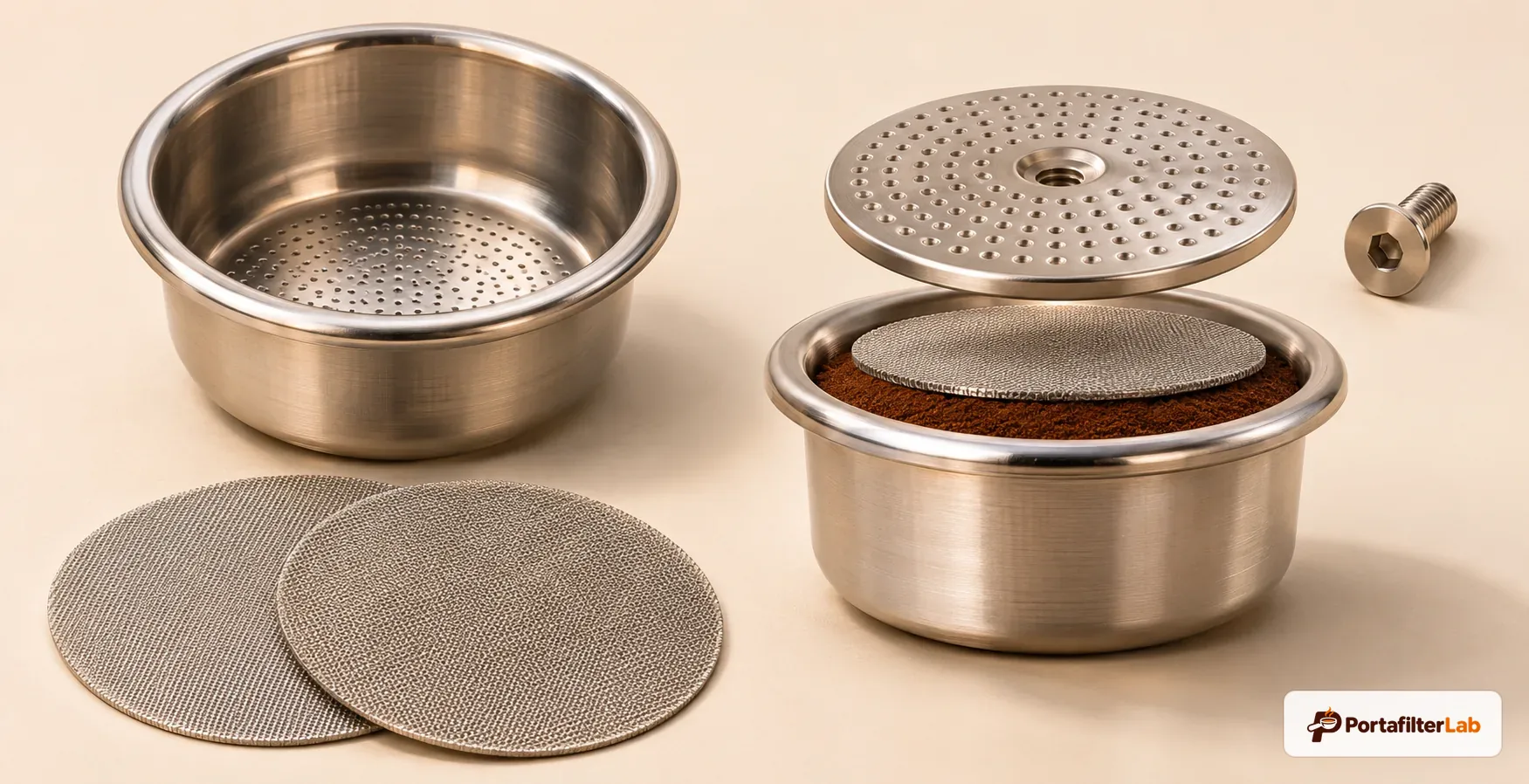
If your 1.7mm sintered steel puck screen comes out bowed or dented in the middle—or your espresso channels sideways—your basket lacks the 2.0mm headspace required to clear a protruding shower screen screw.
IMS & VST Precision Filter Basket Sizing Guide: Height Codes and Portafilter Clearance
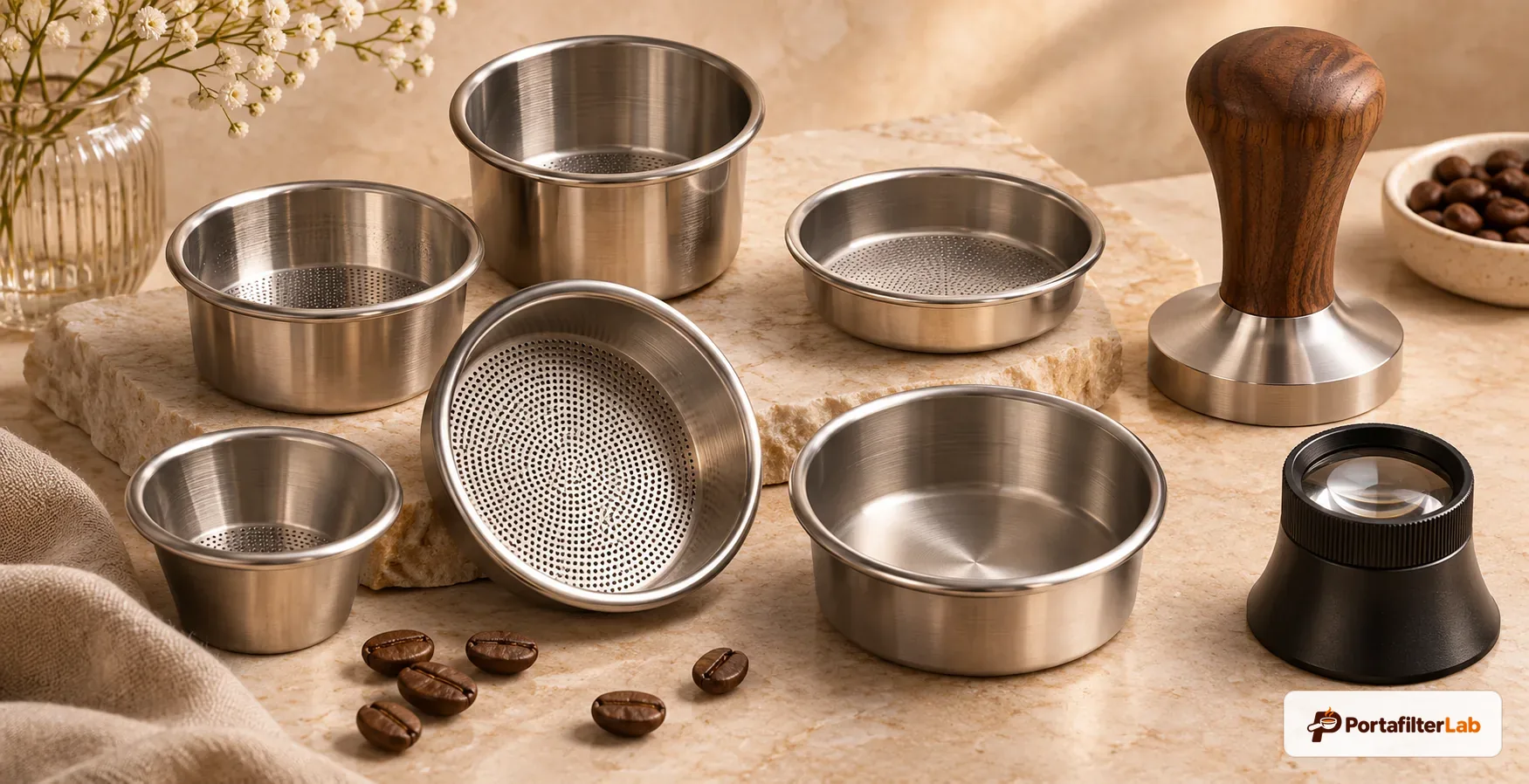
How IMS Competition and VST precision baskets compare across tolerances, wall geometry, part codes (H24, H26, H28), tamper pairing (51.0mm, 53.3mm, 58.5mm), and spouted portafilter depth.
Why Standard E61 58mm Portafilters Do Not Fit the Gaggia Classic Pro
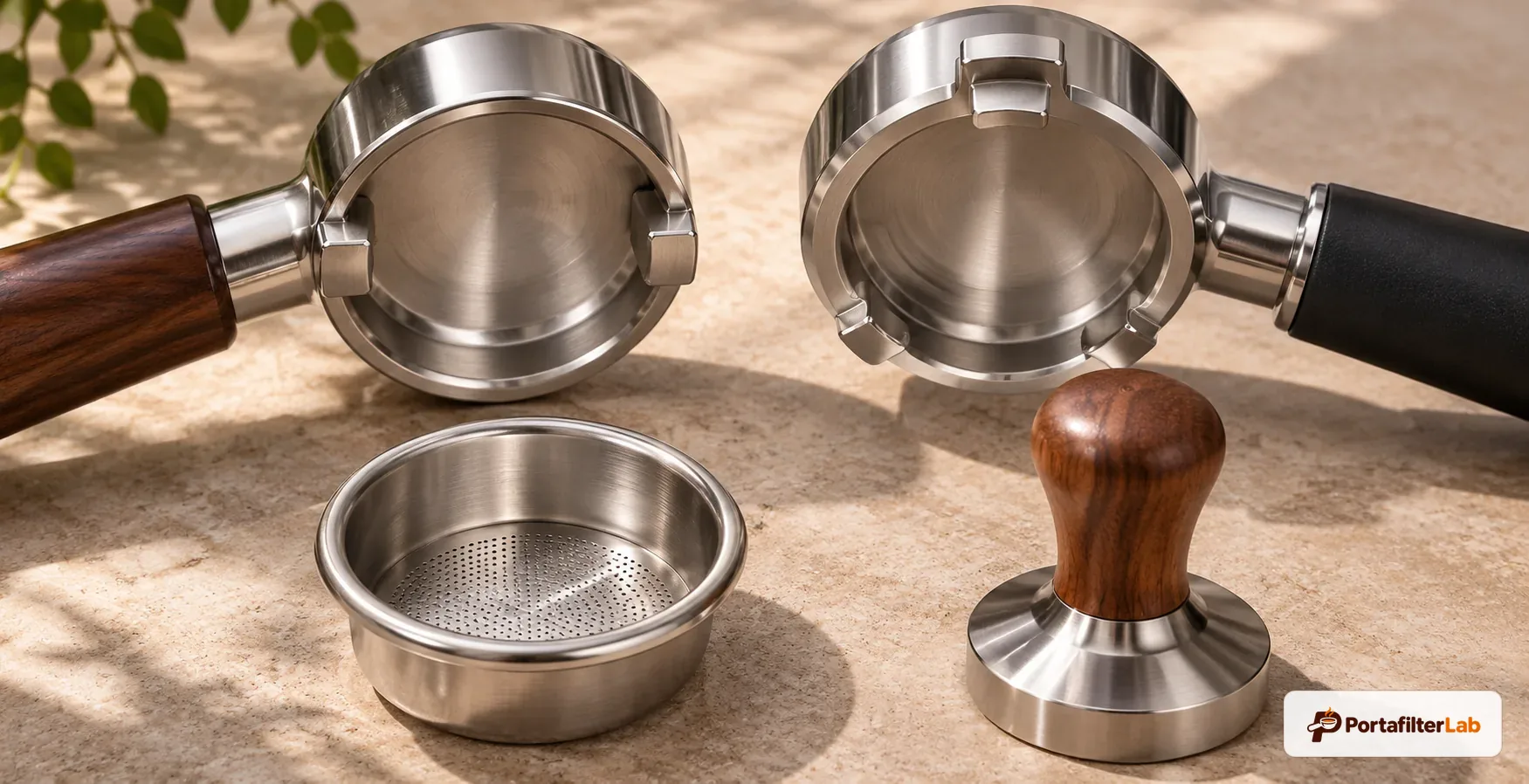
Although Gaggia Classic Pro and E61 machines share commercial 58mm filter baskets and 58.5mm tampers, Gaggia's 45-degree diagonal locking ears (6.3mm thick) will not accept a standard horizontal E61 or Rancilio portafilter.